
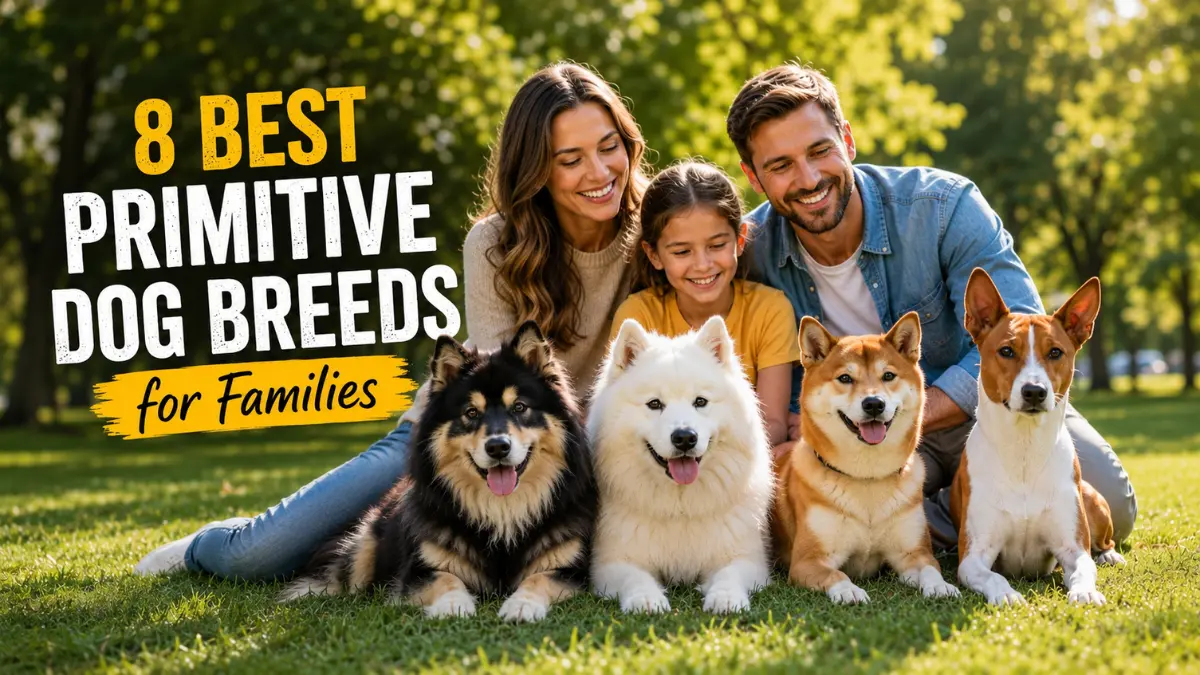
Primitive dog breeds attract people for good reasons. They often have striking looks, deep working histories, and personalities that feel different from those of modern companion breeds.
But they are not all easy family dogs.
Some primitive breeds are social, cooperative, and closely connected to people. Others are independent hunters, strong guardians, or skilled escape artists. A breed that works well for an experienced family with teenagers may be a poor choice for a first-time owner, a home with toddlers, or a household with small pets.
For most families, the Finnish Lapphund, Icelandic Sheepdog, and Samoyed are the strongest starting points. Experienced owners may also consider the Norwegian Elkhound, Xoloitzcuintli, Pharaoh Hound, Ibizan Hound, Finnish Spitz, Basenji, or Shiba Inu.
The right choice depends on your routine, children’s ages, training experience, fencing, climate, grooming tolerance, and other pets.
Quick Answer: Which Primitive Dog Breeds Are Best for Families?
The best primitive dog breeds for families are:
- Finnish Lapphund
- Icelandic Sheepdog
- Samoyed
- Norwegian Elkhound
- Xoloitzcuintli
- Pharaoh Hound
- Ibizan Hound
- Finnish Spitz
- Basenji
- Shiba Inu
The Finnish Lapphund is the best overall choice for many households. The Icelandic Sheepdog is a strong option for active families, while the Samoyed suits owners who want an affectionate northern dog and can manage heavy grooming.
Basenjis and Shiba Inus may suit experienced families, but they are usually more independent and less forgiving of handling or training mistakes.
What Is a Primitive Dog Breed?
A primitive dog breed is generally a breed that has retained physical or behavioral traits linked to its early development, traditional purpose, or long geographic isolation.
The term covers a wide range of dogs. Some were developed to hunt. Others worked as herders, sled dogs, watchdogs, or companions.
Many primitive dogs share tendencies such as:
- Independent decision-making
- Strong awareness of movement and surroundings
- Reserved behavior with strangers
- High prey or chase drive
- Less interest in repetitive obedience
- Sensitivity to harsh treatment
- Strong climbing, digging, jumping, or roaming behavior
These are broad tendencies, not rules. Individual temperament also depends on breeding, health, socialization, training, and daily management.
Primitive vs Ancient, Basal, Landrace, and Spitz Dogs
These terms overlap, but they do not mean the same thing.
An ancient dog breed usually has a long recorded history or ancestry connected to early dog populations.
A basal breed is discussed in genetic research according to its position within the canine family tree.
A landrace developed in a particular region through natural and human selection, often before strict modern breed standards existed.
A spitz usually has upright ears, a wedge-shaped head, a thick coat, and a tail carried over the back. Many spitz breeds are ancient or primitive-type dogs, but not every primitive breed is a spitz.
Because canine organizations and researchers classify these dogs differently, no single primitive breed list is universally accepted.
Are Primitive Dogs Good Family Pets?
Some primitive dogs can make excellent family pets. The best candidates are usually social with their household, manageable in strength, and willing to take part in training and daily routines.
Others are more difficult to live with.
A primitive dog may love its family yet remain suspicious of visitors, selective with other dogs, sensitive to handling, or unreliable around wildlife. Loyalty does not automatically mean easy obedience or broad friendliness.
Families should choose based on the breed’s natural behavior rather than appearance alone.
How We Selected the Best Primitive Dog Breeds for Families
Each breed was assessed using practical family-life factors.
Family Bond
A suitable family dog should form stable relationships with household members and cope reasonably well with normal home activity.
Compatibility With Children
Size, strength, patience, sensitivity, and handling tolerance all affect how well a dog may live with children.
Trainability
Many primitive breeds learn quickly but lose interest in repetitive work. They often respond best to short, rewarding sessions.
Exercise and Prey Drive
Daily activity, chasing instinct, recall, jumping, climbing, and digging can determine whether a breed fits a home.
Grooming and Climate
Heavy shedding, heat sensitivity, cold tolerance, and skin care can add significant work.
Owner Experience
Some primitive breeds are more forgiving of beginner mistakes. Others need owners who already understand independence, prey drive, containment, and consent-based handling.
Best Primitive Dog Breeds for Families at a Glance
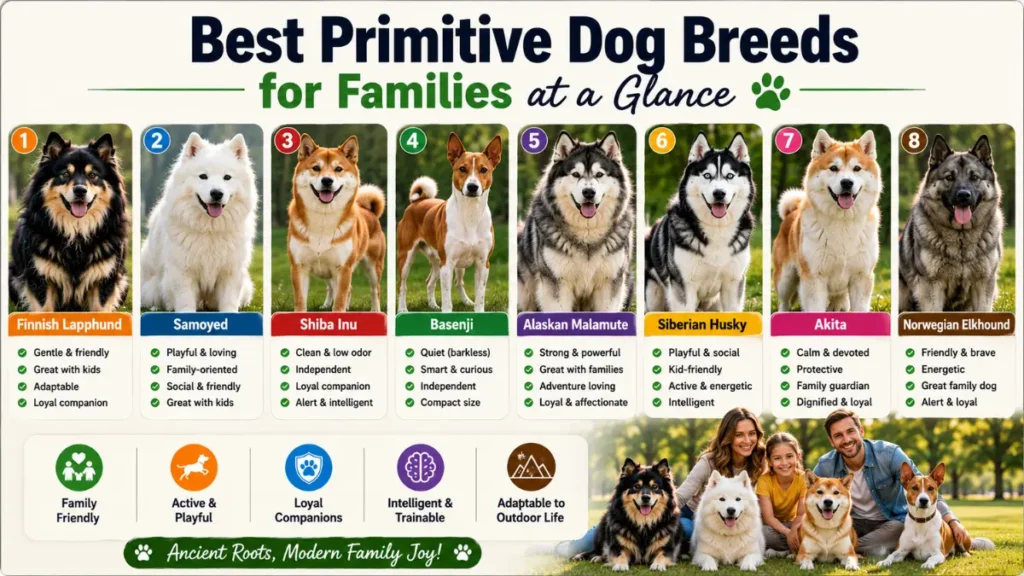
| Breed | Best for | Owner experience | Exercise | Grooming | Main concern |
|---|---|---|---|---|---|
| Finnish Lapphund | Most active families | Beginner to intermediate | Moderate to high | High | Barking and shedding |
| Icelandic Sheepdog | Social, active households | Beginner to intermediate | Moderate to high | Moderate to high | Frequent barking |
| Samoyed | Active families wanting an affectionate dog | Intermediate | High | Very high | Coat care and strength |
| Norwegian Elkhound | Outdoors-oriented families | Intermediate | High | High | Hunting drive and noise |
| Xoloitzcuintli | Calm families wanting a close companion | Intermediate | Moderate | Specialized | Stranger reserve or skin care |
| Pharaoh Hound | Active families with older children | Intermediate | High | Low | Strong prey drive |
| Ibizan Hound | Families with secure space | Intermediate to experienced | High | Low | Jumping and chasing |
| Finnish Spitz | Active homes tolerant of noise | Intermediate | High | Moderate to high | Barking |
| Basenji | Experienced families wanting a smaller dog | Experienced | High | Low | Escape behavior |
| Shiba Inu | Experienced homes with older children | Experienced | Moderate to high | Moderate | Handling tolerance and recall |
1. Finnish Lapphund
The Finnish Lapphund is one of the most balanced primitive-type breeds for family life.
It developed as a northern herding dog, so it often has a stronger working connection with people than breeds created mainly for independent hunting.
Family Temperament
Finnish Lapphunds are commonly described as friendly, calm, intelligent, and attached to their households.
Many enjoy training, outdoor activities, and daily family involvement. Their medium size is also easier for many owners to manage than a large northern working dog.
A well-socialized Finnish Lapphund may live successfully with respectful children.
Ideal Home
This breed fits an active household that can provide:
- Daily walks and play
- Reward-based training
- Scent games and mental enrichment
- Regular brushing
- Plenty of family interaction
A prepared first-time owner may do well with the breed, provided barking and shedding are accepted as normal.
Main Challenges
The thick double coat sheds heavily, especially during seasonal coat changes.
Finnish Lapphunds may also bark at visitors, movement, animals, or unfamiliar sounds. Training can reduce unnecessary barking, but the breed is not naturally quiet.
For families willing to manage coat care and noise, the Finnish Lapphund is one of the strongest overall choices.
2. Icelandic Sheepdog
The Icelandic Sheepdog is a cheerful northern herder that usually wants to stay involved in family life.
Family Temperament
These dogs are often friendly, lively, and responsive to people.
Their herding background generally makes them more interested in human direction than many primitive hunting breeds. They often enjoy games, short training sessions, and outdoor activity.
With good socialization and supervision, they may live well with children.
Fast movement can trigger herding behavior. A young dog may follow, circle, or bark at running children, so calm redirection should begin early.
Ideal Home
The Icelandic Sheepdog suits families that enjoy:
- Hiking
- Interactive play
- Reward-based training
- Regular outdoor activity
- A social and expressive dog
Main Challenges
Barking is often the biggest concern.
Visitors, birds, movement outside, excitement, and normal household sounds may all trigger a response. The coat also sheds and needs regular care.
This breed works best for families that value sociability more than silence.
3. Samoyed
The Samoyed combines an ancient northern working background with a social and affectionate personality.
Its appearance draws attention, but families should make the decision based on grooming, exercise, strength, and time commitment.
Family Temperament
Samoyeds are often playful, outgoing, and closely connected to people.
Well-socialized dogs may enjoy children, visitors, and busy household routines. They usually prefer being included in family life rather than spending long periods alone.
That openness can make them easier to understand than more reserved primitive breeds.
Ideal Home
A Samoyed is more realistic for families that:
- Enjoy regular outdoor exercise
- Can handle a strong dog
- Have time for frequent grooming
- Want an outgoing companion
- Can provide cooling during warm weather
Puppies need age-appropriate activity rather than forced long-distance exercise. Senior dogs may need shorter outings and closer temperature monitoring.
Main Challenges
The coat sheds heavily and can become difficult to manage if neglected.
A bored or isolated Samoyed may become noisy, destructive, or hard to control. Its size and enthusiasm can also overwhelm very young children.
The Samoyed can be an excellent family companion, but it is not a low-maintenance breed.
4. Norwegian Elkhound
The Norwegian Elkhound was developed to locate and hold large game. That history explains much of its confidence, endurance, voice, and independent behavior.
Family Temperament
Norwegian Elkhounds often form strong bonds with their households.
They can be alert, hardy, and deeply involved in family routines. Older children who understand dog boundaries may enjoy the breed’s sturdy and energetic nature.
The breed is naturally watchful, which may be useful in some homes but difficult in neighborhoods with close neighbors.
Ideal Home
A realistic home for this breed includes:
- Frequent outdoor activity
- Secure physical fencing
- Consistent training
- Tolerance for shedding
- Acceptance of barking
- Experience with independent dogs
Main Challenges
Wildlife may quickly become more interesting than the owner. Secure exercise and leash use are often lifelong needs.
Frequent barking is another concern, especially in apartments or tightly packed neighborhoods.
The Norwegian Elkhound is better suited to an outdoors-oriented family than a quiet, low-activity household.
5. Xoloitzcuintli
The Xoloitzcuintli, often called the Xolo, is an ancient Mexican breed found in toy, miniature, and standard sizes.
Both hairless and coated varieties exist.
Family Temperament
Xolos often develop close bonds with familiar people.
They can be calm indoors, observant, and affectionate without being constantly demanding. Their size range gives families more flexibility than many primitive breeds.
A smaller Xolo may fit a compact home, while a standard Xolo may have a stronger watchdog presence.
Ideal Home
The Xolo suits a calm and predictable family that can provide:
- Early socialization
- Respectful handling
- Daily walks and enrichment
- Weather protection
- Time to build trust
Older children are often a better match than toddlers who may grab, chase, or corner the dog.
Main Challenges
Many Xolos are reserved around unfamiliar people.
Socialization should build confidence rather than force interaction. Hairless dogs also need protection from strong sun, cold weather, and skin irritation.
They may require less coat care, but they are not maintenance-free.
6. Pharaoh Hound
The Pharaoh Hound is an athletic primitive-type sighthound with a sensitive and playful personality.
Family Temperament
Many Pharaoh Hounds enjoy household activity and can be affectionate with familiar people.
Their short coat is easier to maintain than the coat of a northern breed, although it provides less protection in cold weather.
They usually respond best to calm, reward-based training. Harsh correction may reduce trust.
Ideal Home
The strongest fit is an active family with:
- Older, respectful children
- Secure running opportunities
- Experience managing chase behavior
- No expectation of unrestricted off-leash freedom
- A warm indoor resting area in cold weather
Main Challenges
Prey drive is the main concern.
A rabbit, squirrel, cat, or other fast-moving animal may trigger an immediate chase. Leash use and secure fencing are essential.
The Pharaoh Hound may suit an active family, but it is a poor choice for homes with weak containment or loose small pets.
7. Ibizan Hound
The Ibizan Hound was developed to pursue rabbits and other small game.
Its elegant build can hide just how fast and athletic it is.
Family Temperament
Many Ibizan Hounds are playful, affectionate, and relaxed indoors after enough activity.
They often enjoy movement-based games and interactive time with family members. Older children who respect the dog’s sensitivity may become good companions.
The short coat is relatively easy to maintain.
Ideal Home
A suitable household can provide:
- Tall, secure fencing
- Safe opportunities to run
- Daily physical and mental activity
- Careful leash handling
- Realistic expectations around small animals
Main Challenges
Low fencing may not contain this breed.
Outdoor furniture, gates, or objects placed near a boundary can create escape routes. Electronic boundaries are not a reliable substitute for physical fencing.
The Ibizan Hound can be a rewarding companion, but containment must be treated as a permanent responsibility.
8. Finnish Spitz
The Finnish Spitz is a lively northern hunting breed whose voice is closely connected to its traditional work.
Family Temperament
Finnish Spitz dogs can be affectionate, alert, and strongly connected to familiar people.
Their moderate size makes them easier to manage than many large primitive breeds. They often enjoy outdoor activity and may live well with older children who respect dog boundaries.
Ideal Home
This breed suits families that:
- Enjoy outdoor exercise
- Can provide secure containment
- Accept frequent barking
- Use patient, reward-based training
- Do not expect perfect off-leash reliability
Main Challenges
Barking is not a minor habit in this breed.
Training may reduce unnecessary noise, but it will not turn a Finnish Spitz into a naturally quiet dog.
Prey drive and independent thinking may also interfere with recall. Families seeking calm and silence should consider another breed.
9. Basenji
The Basenji is a compact hunting dog known for independence, curiosity, and unusual vocal sounds.
Its smaller size makes it appealing, but it does not make the breed easy.
Family Temperament
Basenjis are often clean, active, and affectionate with familiar people.
They may live successfully with older children who understand that companionship does not always mean constant touching or restraint.
A well-managed Basenji can be clever and entertaining. Without enough stimulation, that intelligence may be directed toward climbing, digging, opening doors, or finding other ways to escape boredom.
Ideal Home
Experienced owners are better prepared to manage:
- Strong prey drive
- Escape behavior
- Short attention spans during repetitive training
- Limited off-leash reliability
- Careful introductions to other animals
Main Challenges
The Basenji is often called barkless, but it is not silent. It may yodel, whine, growl, and make several other sounds.
Rabbits, birds, rodents, and some cats may be unsafe around a dog with strong hunting behavior.
Training works best when it is short, varied, and rewarding.
10. Shiba Inu
The Shiba Inu is admired for its compact size, fox-like appearance, and confidence.
It is also one of the primitive breeds most often underestimated.
Family Temperament
Shiba Inus can be loyal, clean, observant, and closely bonded to familiar people.
Many are comfortable spending time independently and do not need constant attention. That quality appeals to some owners but frustrates families that expect eager obedience or frequent physical affection.
Ideal Home
A Shiba Inu is generally more suitable for experienced owners with older, dog-savvy children.
The household should understand:
- Consent-based handling
- Secure leash use
- Possible dog selectivity
- Strong chase behavior
- Limited off-leash reliability
Main Challenges
Some Shiba Inus strongly resist restraint, nail trimming, grabbing, or intrusive handling.
This can create problems in homes where children hug, corner, pick up, or surprise the dog.
Recall may also fail when wildlife appears. Small size should never be confused with beginner-friendly behavior.
Primitive Breeds That Suit Only Certain Families
Some primitive breeds can live successfully with families, but their needs are too narrow for broad recommendations.
Canaan Dog
The Canaan Dog is alert, intelligent, loyal, and naturally cautious.
Its territorial awareness and suspicion of unfamiliar people may make frequent visitors, crowded homes, or unpredictable routines difficult.
Experienced owners who understand calm socialization and careful management are the best match.
Alaskan Malamute
The Alaskan Malamute can be affectionate and socially engaged with family members, but its physical power changes the ownership experience.
It needs substantial exercise, secure containment, and capable adult handling. Prey drive and possible conflict with other dogs may add further difficulty.
Families with older children and previous large working-dog experience are usually better prepared.
Carolina Dog
The Carolina Dog may form a close household bond while remaining cautious in unfamiliar situations.
Temperament can vary according to lineage, early development, and previous experience. Quiet, experienced homes often provide a better fit than busy or unpredictable environments.
Rare primitive breeds may also be difficult to find through responsible sources in the United States. Long waiting lists and travel may be necessary. Rarity should never justify buying from an unverified breeder.
Primitive Breeds That Are Not Ideal for Most Families
These breeds are not poor dogs. Their natural behavior, physical power, rarity, or specialized purpose simply makes them unsuitable as general family recommendations.
Akita
Akitas are powerful and independent guardians.
They may be deeply devoted to their families while remaining territorial or intolerant of other dogs. Their size and management needs usually require experienced ownership.
Chow Chow
Chow Chows are often dignified, reserved, and self-contained.
Many do not enjoy rough handling or constant physical attention. Careful socialization and respectful management are essential.
Korean Jindo
The Korean Jindo is known for loyalty, hunting ability, independence, and close attachment to familiar people.
It may be reserved with strangers, territorial, or selective with other dogs. Secure containment and experienced handling are important.
Karelian Bear Dog
The Karelian Bear Dog was developed for demanding large-game work.
Its intensity, prey drive, and exercise needs make it unsuitable for most ordinary family homes.
Canadian Eskimo Dog
This powerful Arctic working breed has specialized exercise, social, and management requirements.
It is not a practical choice for the average household seeking a companion dog.
New Guinea Singing Dog
The New Guinea Singing Dog is extremely rare and is more closely connected to specialist conservation and expert management than ordinary pet ownership.
It should not be promoted as a typical family dog.
Are Primitive Dog Breeds Good With Children?
Some primitive dogs can live successfully with children, but no breed label replaces adult supervision.
A dog’s response to children depends on genetics, early development, health, previous experience, training, and the child’s behavior.
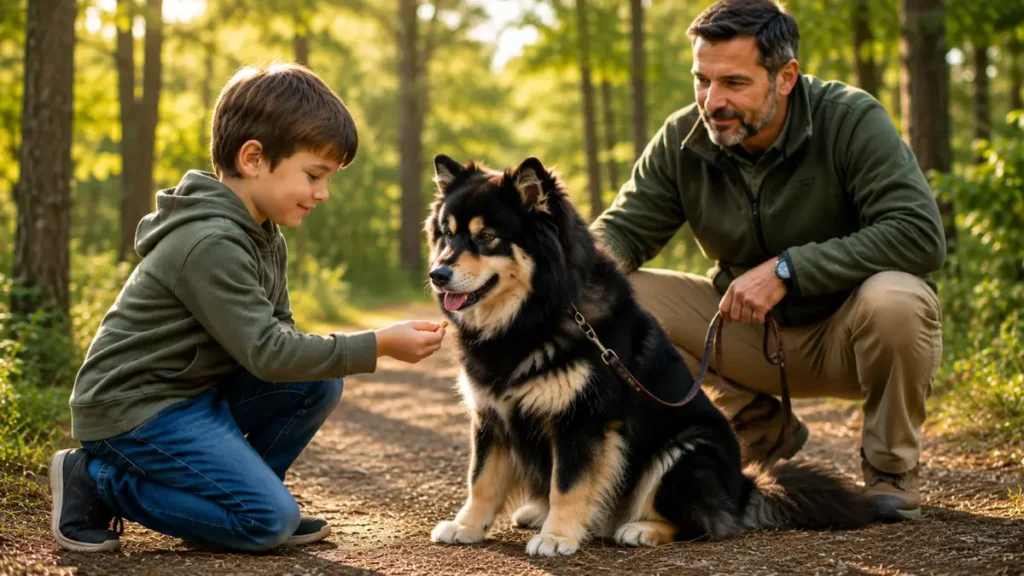
Why Child Age Matters
Toddlers move suddenly, fall, shout, grab, and may approach a dog while it is eating or resting.
Sensitive or independent dogs may find these actions stressful. Older children are often better able to follow rules, notice discomfort, and let a dog move away.
A friendly large dog may also knock over a small child during play without intending harm.
Safe Child–Dog Interaction Rules
Teach children to:
- Leave dogs alone while they eat or sleep
- Avoid climbing on or cornering them
- Never pull fur, ears, paws, or tails
- Avoid tight hugs
- Stay away when a dog is hiding or resting
- Ask before approaching an unfamiliar dog
- Let the dog walk away
- Never remove food or toys from the dog
Young children and dogs need active adult supervision, not occasional checking from another room.
Family-Friendly Does Not Mean Tolerant of Rough Handling
A dog may love its family while disliking restraint, crowds, noise, or constant touching.
This is especially important with Shiba Inus, Basenjis, Canaan Dogs, Chow Chows, and other independent breeds.
The safest match is an individual dog whose size, activity level, sensitivity, and handling tolerance fit the household.
Which Primitive Dogs Are Best for First-Time Owners?
The Finnish Lapphund and Icelandic Sheepdog are the strongest starting points for prepared beginners.
They are often more socially engaged and responsive to people than primitive hunting or guarding breeds.
The Samoyed may also work for a committed first-time owner, although coat care, strength, and exercise make it more demanding.
More Approachable Choices
Finnish Lapphunds and Icelandic Sheepdogs often enjoy family involvement and reward-based training.
They are not effortless. Owners still need to manage barking, shedding, exercise, socialization, and adolescent behavior.
Meeting stable adult dogs gives a more realistic picture than spending time only with puppies.
Breeds Better Suited to Experienced Owners
These breeds usually require more management skill:
- Basenji
- Shiba Inu
- Canaan Dog
- Alaskan Malamute
- Carolina Dog
- Ibizan Hound
- Pharaoh Hound
They may be harder to contain, more prey-driven, more cautious with unfamiliar people, or less interested in conventional obedience.
Can Primitive Dogs Live With Cats and Other Pets?
Some can, but compatibility is difficult to predict when prey drive is strong.
A dog raised with one household cat may accept that animal while chasing unfamiliar cats outside. Early exposure can help, but it does not erase inherited hunting behavior.
Understanding Prey Drive
Prey drive may include:
- Watching
- Stalking
- Chasing
- Grabbing
- Pursuing fleeing animals
Basenjis, Pharaoh Hounds, Ibizan Hounds, Finnish Spitz dogs, Norwegian Elkhounds, Shiba Inus, and other hunting breeds may show strong chase behavior.
Small free-roaming pets usually face the greatest risk.
Why Socialization Is Not a Guarantee
Socialization helps dogs learn to cope with different animals and situations. It cannot promise lifelong compatibility.
Maturity, health, excitement, competition over resources, or changes in the home may affect how pets interact.
Managing a Multi-Pet Home
Use:
- Controlled introductions
- Leashes and barriers
- Separate feeding areas
- Secure gates and doors
- Safe retreat spaces
- Supervision around small animals
A household with rabbits, birds, or free-roaming rodents may not suit a primitive breed with strong hunting instincts.
Can Primitive Dog Breeds Live in Apartments?
Some can, but apartment suitability depends more on behavior and routine than body size.
A small Basenji that becomes destructive when bored may be harder to manage than a calm larger dog. A Finnish Spitz may fit physically but create problems through frequent barking.
What Matters More Than Size?
Consider:
- Exercise requirements
- Barking or howling
- Response to hallway noise
- Ability to settle indoors
- Leash control
- Separation tolerance
- Access to safe outdoor areas
A smaller body does not automatically mean easier apartment living.
Exercise and Enrichment
Primitive dogs often need more than a short walk around the block.
Scent games, puzzle feeders, structured walks, tracking, training sessions, and suitable dog sports can help meet their needs.
Exercise may improve a dog’s ability to settle, but it will not remove inherited hunting, guarding, or vocal behavior.
When Apartment Living Is a Poor Fit
An apartment may be unsuitable when a dog:
- Needs extensive running opportunities
- Reacts strongly to nearby sounds
- Cannot receive enough daily activity
- Has serious separation problems
- Is difficult to control in shared areas
- Lives where weather often limits safe exercise
Building rules, elevators, stairs, nearby dogs, and access to secure outdoor space also matter.
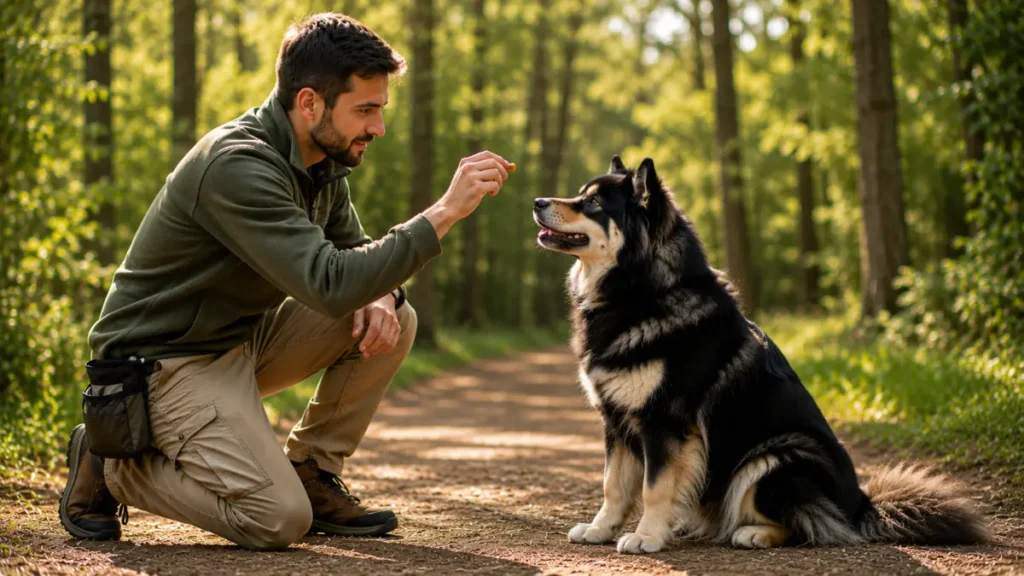
Training a Primitive Dog
Primitive dogs can learn well, but many do not work simply to please people.
Training tends to be more successful when it is clear, rewarding, and varied.
Use Reward-Based Training
Food, toys, movement, sniffing, and access to valued activities can all serve as rewards.
Harsh punishment may increase fear, avoidance, or defensive behavior, especially in sensitive dogs.
A focused five-minute session may be more productive than a long drill that becomes repetitive.
Build Recall Carefully
Begin recall practice indoors or in a secure area. Gradually add distance and distractions while using a long line.
Even a well-trained primitive hunting breed may choose wildlife over the handler. Good management is often more realistic than expecting perfect off-leash control.
Provide Suitable Mental Enrichment
Useful activities include:
- Scent work
- Tracking
- Food-search games
- Lure coursing
- Hiking
- Cooperative handling
- Puzzle feeders
- Pulling sports for suitable adult working breeds
Puppies need short, age-appropriate sessions. Healthy adults can usually manage more sustained activity, while senior dogs may benefit from slower scent games and shorter walks.
Prevent Escapes
Inspect the property for:
- Gaps
- Weak gates
- Digging points
- Climbable objects
- Low sections
- Loose panels
Sighthounds may jump. Basenjis and northern breeds may climb or dig.
Electronic boundaries do not provide physical containment and may fail to stop a dog pursuing wildlife.
Grooming and Climate Considerations
Primitive breeds have very different coat and weather needs.
Heavy Double-Coated Breeds
Finnish Lapphunds, Icelandic Sheepdogs, Samoyeds, Norwegian Elkhounds, Finnish Spitz dogs, Malamutes, and Shiba Inus have dense coats and may shed heavily.
Regular brushing removes loose undercoat and helps prevent tangles or matting.
Routine shaving should not be treated as a simple solution to heat or shedding. Coat or skin concerns should be discussed with a fan or a groomer familiar with double-coated breeds.
Short-Coated Primitive Breeds
Basenjis, Pharaoh Hounds, and Ibizan Hounds need less brushing.
Their coats offer less protection in cold weather, so they may need warm indoor resting areas or suitable protective clothing.
Hairless Xoloitzcuintli Care
Hairless Xolos need protection from strong sunlight, cold, and skin irritation.
Persistent dryness, redness, bumps, or discomfort should be assessed by a veterinarian.
Hot- and Cold-Weather Safety
Heavy-coated northern breeds need:
- Shade
- Fresh water
- Indoor cooling
- Exercise during cooler hours
- Close monitoring in heat and humidity
Short-coated and hairless breeds may need extra protection in cold weather.
Puppies, senior dogs, overweight dogs, and dogs with health problems may tolerate extreme temperatures poorly.
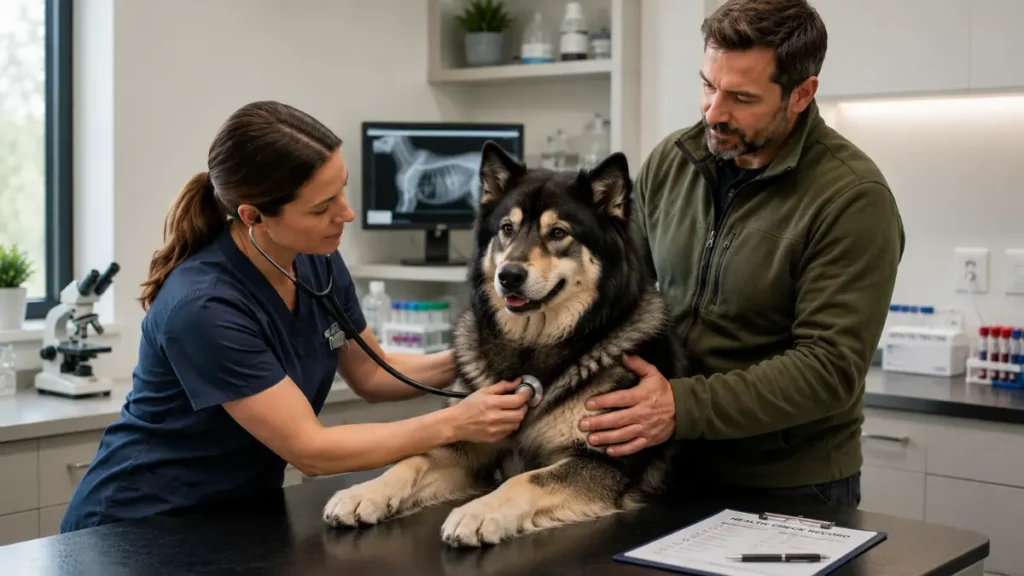
Health Testing and Responsible Ownership
Primitive does not mean disease-free.
Every breed can inherit health problems. Responsible breeders should complete the screening recommended for that breed.
Health Tests to Ask About
Depending on the breed, testing may involve:
- Hips
- Elbows
- Eyes
- Heart
- Thyroid
- Knees
- Breed-specific DNA conditions
Not every test applies to every breed. Families should confirm current recommendations for the dog they are considering.
Health claims should come from veterinary evidence and documented screening, not assumptions about ancient ancestry.
What to Ask a Breeder
Ask for:
- Recommended health-test results
- Information about the parents’ temperaments
- Details about puppy socialization
- A written contract
- A return policy
- Honest discussion of difficult breed traits
- Opportunities to meet adult relatives when possible
A responsible breeder should also ask detailed questions about your home, schedule, children, other pets, and experience.
What to Ask a Rescue or Foster Home
Ask how the dog behaves around:
- Children
- Strangers
- Dogs
- Cats
- Food and toys
- Grooming and handling
- Crates
- Car travel
- Visitors
- Being left alone
Behavior observed in a foster home may provide more useful information than a short shelter meeting.
Why Adult Temperament Matters
Meeting stable adult dogs gives families a clearer picture of how the breed may behave after puppyhood.
Hunting, guarding, independence, or dog-selective behavior may become more noticeable during adolescence or adulthood.
How to Choose the Right Primitive Breed for Your Family
Use a practical matching process instead of choosing by appearance.
- Compare the breed with your normal weekday routine.
- Match its size and handling tolerance to your children’s ages.
- Assess your experience with prey drive, recall, barking, and independence.
- Check your fencing, climate, grooming capacity, and other pets.
- Meet adult dogs and verify health testing before committing.
Choose for Normal Life
Ask whether your household can meet the dog’s needs during:
- Busy workweeks
- Bad weather
- Illness
- Travel
- School schedules
- Seasonal shedding
- Hot or cold periods
A dog must fit ordinary life, not only ideal weekends.
Consider Your Children’s Ages
Families with toddlers may need a more socially tolerant and physically manageable dog than families with responsible teenagers.
Think about the dog’s:
- Size
- Strength
- Sensitivity
- Handling tolerance
- Activity level
- Response to noise
Be Honest About Your Experience
Consider whether you can manage:
- Recall
- Prey drive
- Leash pulling
- Barking
- Resource-related conflict
- Stranger reserve
- Independent behavior
- Handling sensitivity
Motivation cannot replace the skills a demanding breed requires.
Check Your Home and Lifestyle
A breed may be unsuitable when the household:
- Lacks secure physical fencing
- Has small free-roaming pets
- Cannot manage heavy shedding
- Lives in a difficult climate
- Has limited time for exercise
- Needs a quiet dog
- Cannot separate animals safely
Meet Adult Dogs
Meet several well-socialized adults when possible.
Speak with national breed clubs, responsible breeders, trainers, rescue groups, and current owners.
One dog cannot represent an entire breed, but several meetings reveal more than photographs or a short puppy visit.
Best Primitive Dogs by Household Type
| Household type | Stronger starting options |
|---|---|
| Prepared first-time owners | Finnish Lapphund, Icelandic Sheepdog |
| Active families | Samoyed, Norwegian Elkhound, Finnish Lapphund |
| Families with older children | Pharaoh Hound, Ibizan Hound, Finnish Spitz |
| Families wanting a smaller dog | Basenji, Shiba Inu, smaller Xoloitzcuintli |
| Experienced primitive-dog owners | Basenji, Shiba Inu, Canaan Dog |
| Homes wanting lower coat maintenance | Pharaoh Hound, Ibizan Hound, Basenji |
| Families with limited noise tolerance | Avoid highly vocal Finnish Spitz and Icelandic Sheepdogs |
Common Mistakes Families Make
Choosing by Appearance
Wolf-like coats, curled tails, unusual colors, and ancient histories do not measure family compatibility.
A striking dog may still be too vocal, powerful, prey-driven, or independent for the household.
Confusing Loyalty With Obedience
A dog can be deeply loyal while still ignoring recall, disliking strangers, or resisting repeated commands.
Loyalty describes attachment. It does not guarantee easy training or broad sociability.
Underestimating Prey Drive
Secure fencing and leash management may remain lifelong needs.
Waiting for the first escape before improving containment can lead to injury, loss, or conflict with wildlife.
Assuming a Yard Is Enough
A yard provides space, but it does not provide structure, training, social exposure, or mental enrichment.
Primitive dogs still need purposeful activity and interaction.
Expecting Socialization to Remove Natural Instincts
Socialization can improve confidence and teach appropriate behavior.
It cannot remove every inherited hunting, guarding, territorial, or handling tendency.
Ignoring Health and Temperament
A puppy’s appearance cannot reveal inherited health risks or future temperament.
Families should verify health screening and learn about the behavior of parents and adult relatives before committing.
Frequently Asked Questions
What Is the Best Primitive Dog Breed for a Family?
The Finnish Lapphund is one of the strongest overall choices because it is generally social, trainable, and closely attached to its household. The Icelandic Sheepdog and Samoyed are also strong options for active families.
Which Primitive Dog Is Best for First-Time Owners?
The Finnish Lapphund and Icelandic Sheepdog are among the more approachable choices. Beginners still need to prepare for exercise, shedding, barking, and adolescent behavior.
Are Primitive Dogs Good With Young Children?
Some can live successfully with young children, but active adult supervision is essential. The individual dog must be stable and well matched, and children must respect its food, rest, body, and personal space.
Are Primitive Dog Breeds Aggressive?
Primitive dogs are not automatically aggressive. Some breeds may be more reserved, territorial, dog-selective, or sensitive in unfamiliar situations.
What Is the Easiest Primitive Dog Breed to Train?
Finnish Lapphunds and Icelandic Sheepdogs are often more cooperative than highly independent primitive hunting breeds.
Can Primitive Dogs Live With Cats?
Some can, especially after careful introductions. Strong prey drive may still make compatibility uncertain.
Can Primitive Dog Breeds Live in Apartments?
Some can when their exercise, barking, enrichment, and management needs are met. Behavior and routine matter more than size alone.
Are Ancient Dog Breeds Healthier Than Modern Breeds?
Not necessarily. Ancient or primitive status does not protect a dog from inherited disease.
What Is the Difference Between an Ancient and a Primitive Dog Breed?
Ancient usually refers to long historical or genetic ancestry. Primitive often refers to classification, traditional development, or retained physical and behavioral traits.
Final Thoughts
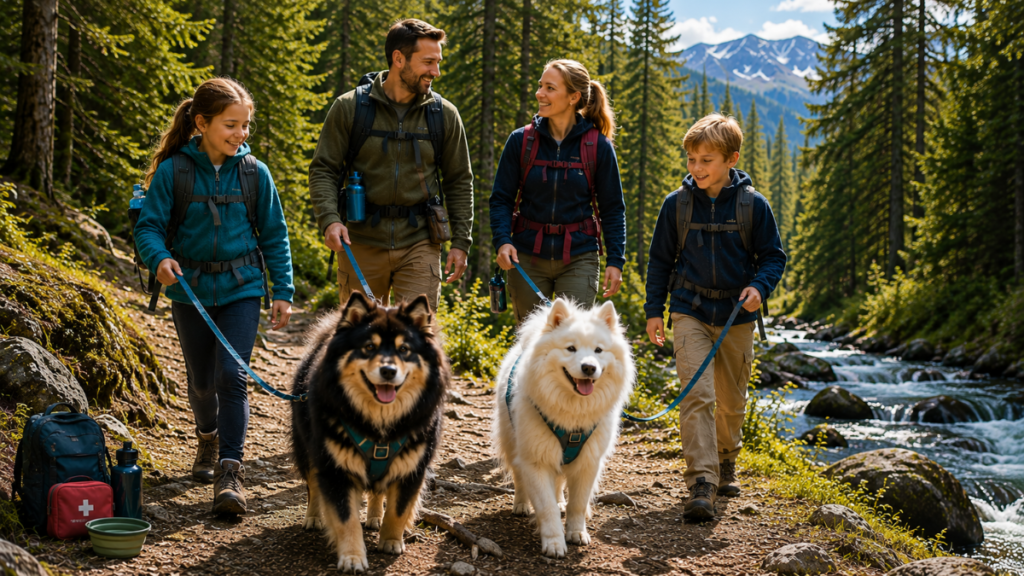
For many families, the Finnish Lapphund and Icelandic Sheepdog are the most approachable primitive-type breeds. The Samoyed may also suit active households that can handle extensive grooming and regular exercise.
Experienced families may consider the Norwegian Elkhound, Xoloitzcuintli, Pharaoh Hound, Ibizan Hound, Finnish Spitz, Basenji, or Shiba Inu.
Each breed brings a different challenge. It may be barking, prey drive, grooming, handling sensitivity, escape behavior, or independence.
The most useful next step is to reduce your list to two or three realistic breeds. Meet stable adult dogs, verify health testing, and compare each breed’s needs with your actual schedule, children, climate, fencing, and other pets.
A primitive dog can become a rewarding family companion when the household respects its natural behavior and chooses with care.