
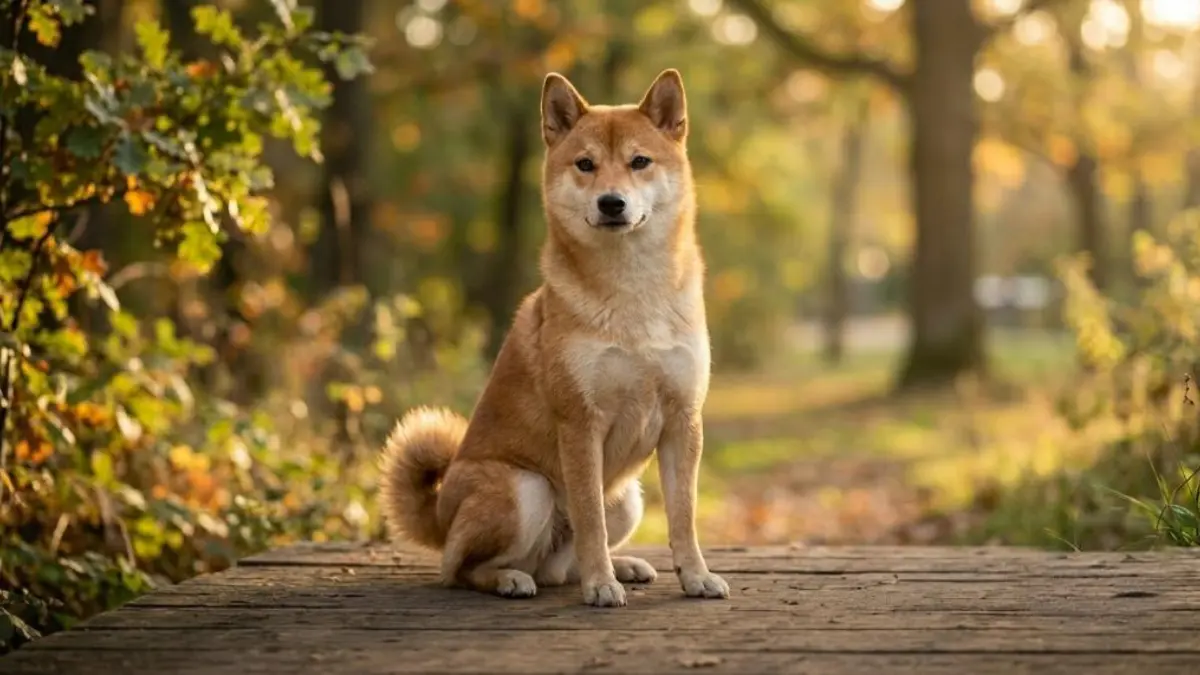
The Dog That Looks Easy — Until You Live With One
The Shiba Inu often wins people over before a single command is spoken.
Clean appearance. Fox-like face. Compact body. Low odor. Quiet indoors.
On paper, it feels like an easy urban companion.
But real ownership tells a different story.
Many experienced dog owners describe a familiar turning point — when the dog that looked “manageable” begins making independent decisions that don’t align with training expectations.
Not out of disobedience.
Out of instinct.
The Shiba Inu doesn’t ignore you because it doesn’t understand you. It ignores you when your request doesn’t rank high enough in its internal decision system.
That difference defines everything about this breed.
Quick Breed Overview
| Trait | Detail |
|---|---|
| Origin | Japan |
| Type | Primitive Spitz |
| Height | 13–17 inches |
| Weight | 17–25 lbs |
| Lifespan | 13–16 years |
| Energy | Moderate–High |
| Barking | Low |
| Shedding | High (seasonal blow coat) |
| Trainability | Moderate–Difficult |
| Family Fit | Conditional |
What Is a Shiba Inu?
The Shiba Inu is one of Japan’s oldest native dog types, originally developed for hunting in mountainous terrain.
Unlike modern companion breeds shaped for constant human cooperation, the Shiba Inu evolved for:
- independent tracking
- fast decision-making
- silent movement
- prey-focused hunting behavior
This history is still visible today.
A Shiba Inu doesn’t “wait for instruction” in unfamiliar situations. It evaluates and acts.
History and Origin
The breed traces back thousands of years in Japan’s rural regions, where it was used for hunting small game such as birds and rabbits.
During World War II, the breed population nearly collapsed due to:
- food shortages
- distemper outbreaks
- wartime destruction
Afterward, surviving regional lines were carefully combined to rebuild the modern Shiba Inu.
This controlled restoration preserved its primitive instincts rather than replacing them with modern obedience traits.
Why the Shiba Inu Is a Primitive Breed
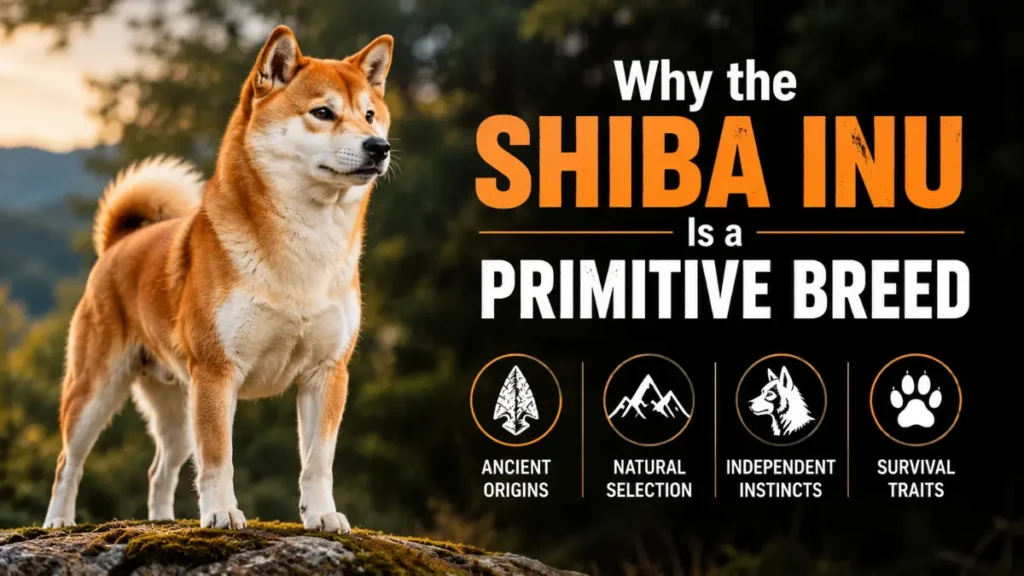
The Shiba Inu is classified as a primitive breed because it retains early canine survival traits.
These include:
- strong independence
- environmental awareness
- instinct-driven decision-making
- limited handler dependency
- high prey responsiveness
Real behavioral implication
In real-world situations, a Shiba Inu often operates like this:
“Is this worth my attention right now?”
That internal evaluation system is constant.
It does not default to human direction unless trust, consistency, and motivation are extremely well established.
Appearance and Structure
The Shiba Inu has a compact, athletic frame built for agility and terrain movement.
Key features:
- fox-like face
- curled tail carried over the back
- upright triangular ears
- dense double coat
- balanced, muscular structure
Coat colors:
- red
- sesame
- black and tan
- cream
The coat is functional, not aesthetic — designed for weather protection and insulation.
Temperament and Personality
The Shiba Inu temperament blends confidence, restraint, and selective attachment.
This is not a “constant affection” breed.
It is a “controlled relationship” breed.
Core traits:
- independent thinking
- emotional self-control
- strong personal boundaries
- selective bonding
- calm but alert presence
Are Shiba Inus affectionate?
Yes — but not in an expressive way.
Many owners notice:
- proximity instead of physical clinginess
- quiet companionship rather than constant interaction
- affection on the dog’s terms
Real ownership observation (important)
In multi-year ownership patterns, Shiba Inus often:
- bond strongly with one person
- tolerate others rather than actively engage
- show affection during calm environments, not high stimulation moments
Are Shiba Inus aggressive?
Not inherently.
But they have a low tolerance threshold for perceived control pressure, which can lead to defensive reactions if:
- restrained forcibly
- handled roughly
- pushed during stress
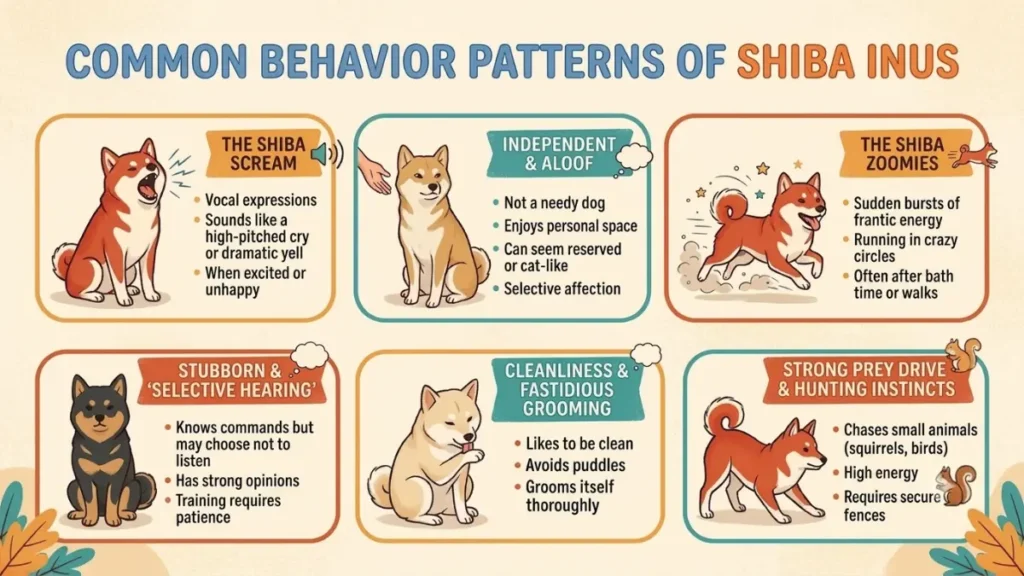
The Shiba Scream
The Shiba scream is a stress vocalization, not random noise.
Common triggers:
- restraint during grooming
- veterinary handling
- nail trimming
- sudden forced movement restriction
It is a reflex response linked to frustration + high arousal sensitivity.
Common Behavior Patterns
Escape behavior
Shibas are highly skilled at escaping confinement.
Real-world patterns include:
- slipping harnesses
- exploiting weak fence points
- timing door openings
This is consistent across global ownership reports.
Recall failure
Even well-trained Shibas may disengage recall when:
- prey stimulus appears
- strong scent tracking begins
- environmental curiosity overrides reward value
This is instinct-driven, not training failure.
Selective obedience
A trained Shiba may perform commands perfectly in calm conditions but ignore them under competing stimuli.
This is one of the most misunderstood traits in the breed.
Family Compatibility
Shiba Inus can live in family environments, but success depends on structure.
Good fit:
- calm, consistent households
- older children who respect boundaries
- structured daily routines
Risky fit:
- toddlers (unpredictable handling)
- chaotic environments
- inconsistent rule systems
Training Difficulty
The Shiba Inu is intelligent but not compliance-driven.
It learns quickly but evaluates whether compliance is worthwhile.
What works:
- reward-based reinforcement
- short focused sessions
- high-value motivation
- consistency across all family members
What fails:
- repetition without engagement
- punishment-heavy methods
- inconsistent commands
Exercise and Mental Needs
A healthy Shiba Inu requires:
- 60–90 minutes of daily activity
- structured walks (not chaotic free roaming)
- scent-based enrichment
Without mental stimulation, behavior problems often appear first as independence-driven exploration.
Grooming and Shedding
Shiba Inus have a dense double coat that sheds heavily during seasonal transitions.
Do they shed a lot?
Yes — especially during coat blow periods.
Expect:
- heavy spring shedding
- heavy fall shedding
- consistent light shedding year-round
Climate Tolerance
Shibas handle cold climates well due to coat structure.
Heat tolerance is moderate.
In warm regions:
- avoid peak heat walks
- ensure hydration
- provide shaded rest periods
Common Health Issues
Shibas are generally healthy but prone to certain conditions:
- patellar luxation
- hip dysplasia
- glaucoma
- progressive retinal atrophy
- allergies
Veterinary perspective
Most risks are manageable with responsible breeding and early screening programs.
Lifespan
Average lifespan: 13–16 years
Longevity depends on:
- weight management
- dental care
- genetic screening
- preventive veterinary care
Diet and Nutrition
Shibas do well on balanced diets, including mixed feeding approaches.
Key nutritional needs:
- controlled calories
- high-quality protein sources
- stable feeding routines
Many Shibas self-regulate food intake more than food-driven breeds.
Puppy Development
8 weeks–4 months:
- rapid learning window
- structured social exposure required
4–9 months:
- independence increases
- consistency becomes critical
1–2 years:
- behavioral stability phase begins
Cost of Ownership
Initial cost:
$1,500–$3,500+
Annual cost:
$1,200–$3,000+
Major expenses:
- veterinary care
- training
- grooming tools
- insurance
Breed Comparisons
Shiba Inu vs Basenji
Basenji dog is more independent but less coat maintenance.
Shiba Inu vs Akita
Akita is larger, more guardian-oriented.
Shiba Inu vs Canaan Dog
Canaan Dog shows stronger alert/watch tendencies.
Pros and Cons
| Pros | Cons |
|---|---|
| Clean habits | Strong independence |
| Intelligent | Recall challenges |
| Quiet indoors | Heavy shedding |
| Long lifespan | Escape tendency |
Should You Get a Shiba Inu?
Shiba Inus are best suited for owners who understand independent breeds.
Ideal owners:
- experienced handlers
- structured households
- patient trainers
Not ideal for:
- first-time owners expecting obedience
- highly unpredictable environments
- owners needing constant compliance
Final Expert Verdict
The Shiba Inu is not difficult because it lacks intelligence.
It is difficult because it does not prioritize human instruction by default.
Once ownership expectations shift from obedience to cooperation, the relationship becomes significantly more stable.
This breed doesn’t resist training.
It simply evaluates whether the request matters enough to follow.