
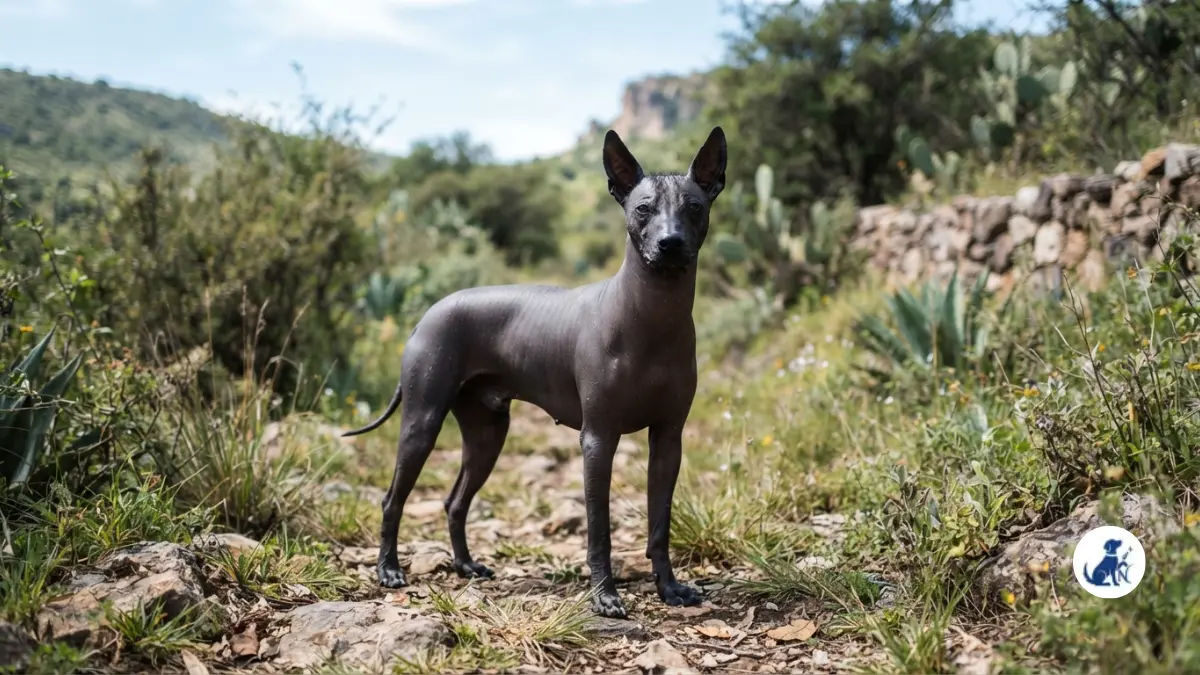
| Breed Snapshot | Details |
|---|---|
| Also Known As | Xolo, Mexican Hairless Dog |
| Origin | Mexico |
| Breed Group (AKC) | Non-Sporting |
| FCI Classification | Spitz and Primitive Types (Primitive Type) |
| Breed Type | Companion and Watchdog |
| Available Varieties | Hairless and Coated |
| Available Sizes | Toy, Miniature, Standard |
| Height | 10–23 inches (depending on size) |
| Approximate Weight | Toy: 10–15 lb • Miniature: 15–30 lb • Standard: 30–55 lb |
| Life Expectancy | Typically 13–18 years |
| Temperament | Loyal, calm, intelligent, alert, affectionate |
| Energy Level | Moderate |
| Trainability | Moderate to High with positive reinforcement |
| Shedding | Very low (Hairless), Low (Coated) |
| Grooming Needs | Low for coat, Moderate for skin care (Hairless) |
| Good With Children | Yes, with proper socialization and respectful interactions |
| Good With Cats | Usually yes when raised together |
| Good With Other Dogs | Generally yes with early socialization |
| Apartment Friendly | Yes, if exercise and mental stimulation needs are met |
| First-Time Owner Friendly | Possible for committed owners willing to learn |
| Best For | Families, singles, couples, experienced owners, and people looking for a low-shedding companion |
| Not Ideal For | Owners wanting a completely maintenance-free dog or those away from home for long periods |
The Xoloitzcuintli (pronounced show-low-eats-QUEENT-lee), often called the Xolo or Mexican Hairless Dog, is one of the oldest known dog breeds in the world. While the hairless variety is the best known, the breed naturally comes in both hairless and coated forms and is recognized in Toy, Miniature, and Standard sizes.
Xolos are admired for their intelligence, loyalty, and calm temperament. They usually form exceptionally strong bonds with their families and tend to be observant rather than overly social with strangers. Their unique appearance often attracts attention, but responsible ownership involves much more than appreciating how they look.
The hairless variety requires regular skin care, while both varieties need consistent training, balanced nutrition, daily exercise, and preventive veterinary care. With the right owner, the Xoloitzcuintli becomes a devoted companion that can remain an important part of the family for many years.
This guide covers everything prospective and current owners should know, including temperament, size, lifespan, grooming, training, feeding, health, and everyday care.
Xoloitzcuintli Dog at a Glance
The Xoloitzcuintli combines an ancient history with the qualities of a modern companion dog. Instead of seeking attention from everyone they meet, many Xolos build deep trust with their families while remaining naturally attentive to unfamiliar situations.
This breed is generally best suited to owners who want a loyal companion, enjoy spending time with their dog, and are prepared to provide regular training, exercise, and care.
Is the Xoloitzcuintli Right for You?
A Xoloitzcuintli may be an excellent choice if you:
- Want a loyal companion that enjoys being close to its family.
- Prefer a generally quiet breed.
- Can provide daily exercise and mental enrichment.
- Are willing to invest time in training and socialization.
- Understand that hairless dogs require regular skin care.
- Appreciate a rare breed with thousands of years of history.
Another breed may be a better fit if you:
- Expect every dog to welcome strangers immediately.
- Want a completely maintenance-free pet.
- Spend long hours away from home most days.
- Prefer a breed that requires very little training or interaction.
Owner Suitability Checklist
| Lifestyle | Suitable? |
|---|---|
| Active individual or couple | ✔ Excellent |
| Family with respectful children | ✔ Very Good |
| Apartment living | ✔ Good with daily exercise |
| Experienced dog owner | ✔ Excellent |
| Dedicated first-time owner | ✔ Possible |
| Frequently away from home | ✘ Not Ideal |
| Looking for a low-shedding breed | ✔ Excellent |
| Wants an independent outdoor dog | ✘ Not Ideal |
What Is a Xoloitzcuintli Dog?
The Xoloitzcuintli is an ancient Mexican breed valued for its intelligence, loyalty, and close relationship with people. It has served as both a trusted companion and an alert watchdog for centuries, and today it continues to excel as a devoted family dog.
Although many people use the name Mexican Hairless Dog, that description applies only to one variety. The breed naturally includes both hairless and coated dogs, each sharing the same personality, intelligence, and overall breed characteristics.
Pronunciation and Alternate Names
The breed’s name looks challenging, but its pronunciation is easier than many people expect.
Show-low-eats-QUEENT-lee
Common names include:
- Xolo
- Mexican Hairless Dog
- Mexican Hairless
- Xoloitzcuintli
Breed History and Origin
The Xoloitzcuintli has deep roots in Mexican history and is widely regarded as one of the world’s oldest dog breeds. Archaeological discoveries indicate that dogs resembling today’s Xolo lived in ancient Mesoamerica thousands of years ago.
Historically, these dogs served as loyal companions, household guardians, and culturally significant animals. Over time, the breed retained many of its original characteristics while adapting successfully to modern family life.
Today, the Xolo remains recognizable for its intelligence, alertness, and thoughtful nature—qualities often associated with primitive breeds.
Breed Purpose
Historically, the Xolo served several important roles:
- Companion dog
- Household watchdog
- Family protector
- Cultural companion in ancient Mexican civilizations
Modern Xolos continue to excel as affectionate companions while naturally remaining aware of their surroundings.
Hairless vs. Coated Xoloitzcuintli
One of the breed’s most distinctive characteristics is that puppies from the same litter may be either hairless or coated.
| Hairless Xolo | Coated Xolo |
|---|---|
| Little or no body hair | Short, smooth coat |
| Requires regular skin care | Requires occasional brushing |
| Very low shedding | Low shedding |
| More sensitive to extreme weather | Coat provides slightly more natural protection |
| Skin should be inspected regularly | Coat should be maintained routinely |
Both varieties share the same:
- Temperament
- Intelligence
- Loyalty
- Exercise needs
- Trainability
- Average lifespan
The primary difference lies in grooming and skin-care requirements rather than personality.
Xoloitzcuintli Size, Weight & Appearance
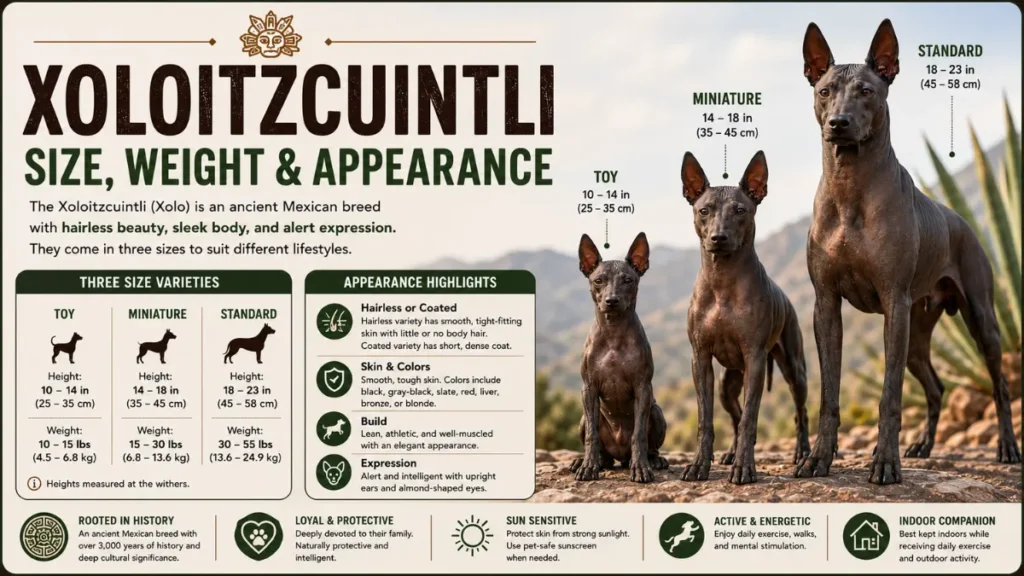
The Xoloitzcuintli is available in three officially recognized sizes, giving prospective owners flexibility when choosing a dog that best matches their home and lifestyle.
Toy Size
Toy Xolos stand approximately 10–14 inches tall and generally weigh 10–15 pounds.
Their compact size makes them well suited for apartments and smaller homes, provided they receive regular exercise and mental stimulation.
Miniature Size
Miniature Xolos measure over 14 inches up to 18 inches tall and usually weigh 15–30 pounds.
Many owners consider this size an ideal balance between portability and athletic ability.
Standard Size
Standard Xolos stand over 18 inches up to 23 inches tall and generally weigh 30–55 pounds.
The largest variety often has a more athletic appearance while remaining an affectionate family companion and naturally attentive watchdog.
Coat Colors and Skin Characteristics
The breed appears in a wide variety of natural colors, including black, gray, slate, bronze, liver, and reddish shades.
Hairless Xolos have smooth, firm skin that may naturally develop freckles or darker pigmentation as they mature. Coated Xolos have a short, close-fitting coat in many of the same colors.
Because exposed skin is more vulnerable to environmental conditions, owners should routinely check hairless dogs for dryness, irritation, scratches, or other changes during grooming.
The coated variety requires less skin-specific care but still benefits from regular grooming and overall health checks.
Xoloitzcuintli Temperament & Personality
The Xoloitzcuintli is best known for its loyalty, intelligence, and calm confidence. Rather than being overly outgoing, most Xolos prefer to observe unfamiliar situations before deciding how to respond. Once they trust someone, however, they are affectionate, devoted, and eager to stay close to their family.
Their thoughtful nature makes them excellent companions for owners who appreciate a dog that is attentive without constantly demanding attention. They are generally happiest when they can participate in everyday family life instead of spending long periods alone.
Because the breed is both intelligent and emotionally sensitive, calm guidance and consistent routines usually produce the best behavior. Harsh training methods can reduce confidence and weaken the bond between dog and owner.
Family Personality
Within the home, the Xoloitzcuintli is affectionate and deeply loyal.
Many owners describe the breed as quietly following family members from room to room rather than seeking constant excitement. After receiving enough daily exercise, most adult Xolos are content to relax beside their favorite people.
Although they enjoy playtime, especially as puppies and young adults, they are not usually hyperactive dogs. Their balanced energy level makes them pleasant companions for many different lifestyles.
Around Strangers
A Xolo’s reserved attitude toward strangers is one of its defining characteristics.
Instead of greeting every visitor enthusiastically, most prefer to observe first and become comfortable at their own pace. This cautious behavior should not be mistaken for fearfulness or aggression.
Proper socialization from an early age helps the breed remain confident and polite while reducing unnecessary suspicion of unfamiliar people.
With Children
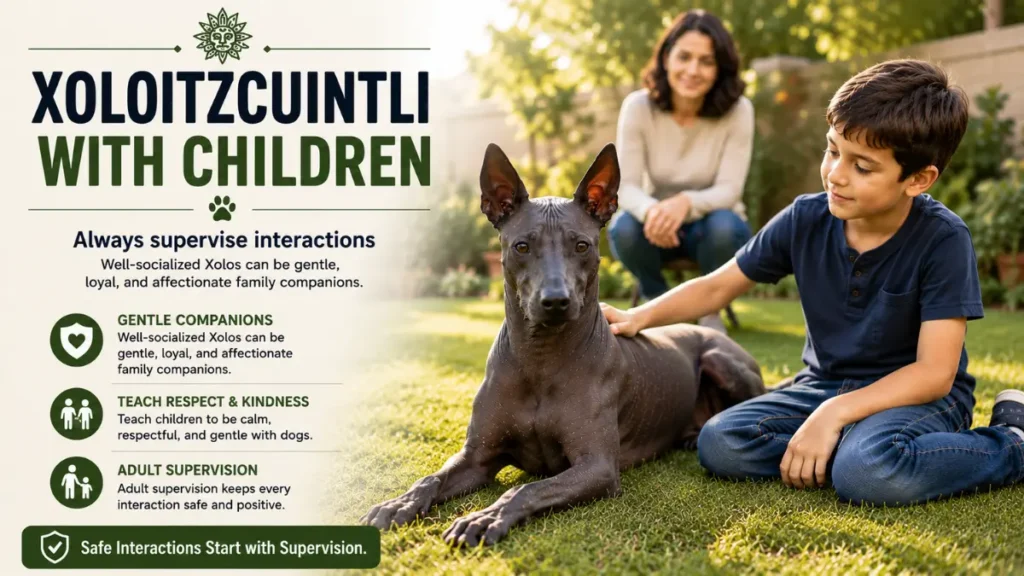
When raised with respectful children and properly socialized, the Xoloitzcuintli can become a gentle and dependable family companion.
To encourage safe interactions:
- Teach children to approach dogs calmly.
- Avoid rough play or teasing.
- Supervise interactions with young children.
- Allow the dog to rest without interruption when it chooses.
These simple habits help create positive relationships that benefit both children and dogs.
With Cats
Many Xolos adapt well to living with cats, particularly when introductions begin during puppyhood.
Successful introductions are more likely when:
- Meetings are gradual.
- Positive behavior is rewarded.
- Each pet has its own safe space.
- Early interactions remain supervised.
Individual personalities vary, so patience is important when introducing any new pet.
With Other Dogs
Most Xoloitzcuintlis enjoy the company of other dogs when they receive appropriate early socialization.
Puppy classes, supervised play sessions, and positive experiences with friendly dogs help develop confidence and appropriate canine manners.
Some adults remain selective about unfamiliar dogs, but this is often manageable through continued socialization and responsible handling.
Barking and Protective Instincts
The Xoloitzcuintli is naturally alert without being excessively vocal.
Instead of barking constantly, most individuals bark only when something unusual catches their attention. This balanced temperament makes the breed an effective watchdog while still fitting comfortably into quieter households.
Is the Xoloitzcuintli a Good Family Dog?
For many households, the answer is yes.
The Xoloitzcuintli is affectionate, loyal, and happiest when treated as a true member of the family. Although naturally reserved around unfamiliar people, a well-socialized Xolo is typically gentle, dependable, and protective of those it knows.
Families willing to provide companionship, structure, and consistent training often find the breed to be a rewarding lifelong companion.
Family Compatibility Matrix
| Lifestyle or Household | Compatibility |
|---|---|
| Families with respectful children | ⭐⭐⭐⭐⭐ |
| Singles | ⭐⭐⭐⭐⭐ |
| Couples | ⭐⭐⭐⭐⭐ |
| Seniors | ⭐⭐⭐⭐☆ |
| Apartment living | ⭐⭐⭐⭐☆ |
| Homes with cats | ⭐⭐⭐⭐☆ |
| Homes with other dogs | ⭐⭐⭐⭐☆ |
| Active owners | ⭐⭐⭐⭐⭐ |
| Dedicated first-time owners | ⭐⭐⭐☆☆ |
| Frequently absent owners | ⭐⭐☆☆☆ |
These ratings are general guidelines. Individual temperament depends on genetics, training, and socialization.
Best Owner Match
This breed is usually an excellent fit for owners who:
- Want a loyal companion rather than an overly social dog.
- Enjoy spending time with their dog every day.
- Can provide regular exercise and enrichment.
- Value calm, reward-based training.
- Understand the ongoing grooming or skin-care needs of the breed.
Owners who enjoy building a close relationship with their dog are often especially satisfied with the Xolo.
First-Time Owners
Although not the easiest beginner breed, the Xoloitzcuintli can be a good choice for first-time owners who are committed to learning.
Success often depends on:
- Beginning socialization early.
- Attending puppy training classes.
- Using positive reinforcement.
- Remaining patient and consistent.
- Learning about primitive breed behavior before bringing the dog home.
Prepared first-time owners often find the breed highly rewarding.
Apartment Living
The Xoloitzcuintli adapts well to apartment living when its exercise and mental stimulation needs are met.
Its moderate activity level, relatively quiet nature, and low shedding make it suitable for smaller living spaces.
Daily walks, interactive games, and training sessions help prevent boredom while supporting good behavior indoors.
Climate Suitability
Weather deserves special attention, particularly for the hairless variety.
Hairless Xolos are more sensitive to:
- Strong sunlight
- Freezing temperatures
- Cold wind
- Sudden weather changes
Coated Xolos have slightly more natural protection, but both varieties benefit from sensible weather management throughout the year.
Xoloitzcuintli Care Guide
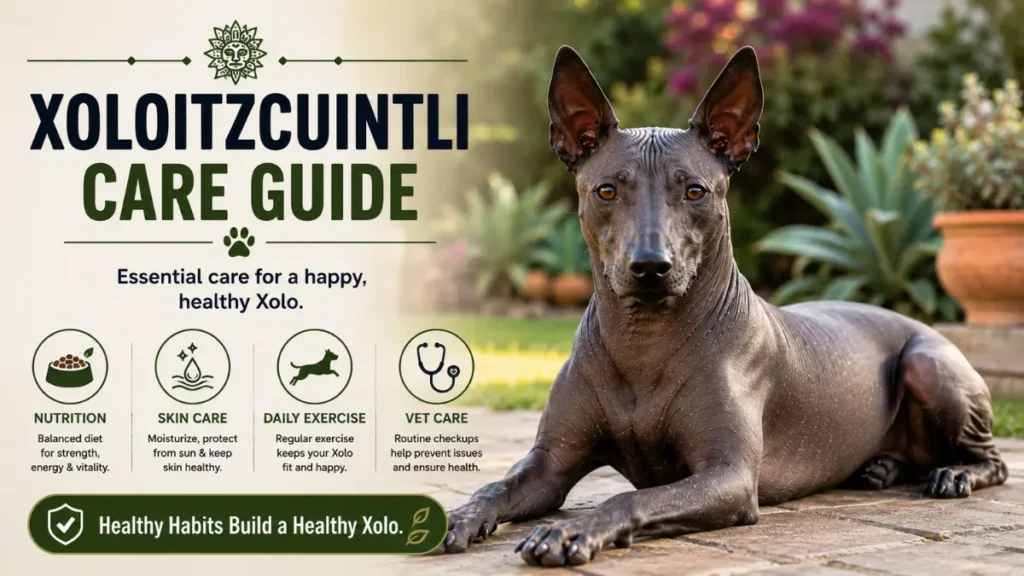
The Xoloitzcuintli’s care routine depends on whether it is hairless or coated, but both varieties require regular attention to remain healthy.
Rather than spending significant time brushing thick fur, owners of hairless dogs focus on keeping the skin healthy, clean, and protected.
Hairless Skin Care
Healthy skin is one of the most important aspects of caring for a hairless Xolo.
A practical routine includes:
- Checking the skin regularly.
- Removing dirt after outdoor activities.
- Watching for dryness, redness, or irritation.
- Protecting exposed skin from prolonged sun exposure.
- Avoiding harsh products that may irritate sensitive skin.
Occasional skin blemishes may occur in young dogs. Persistent skin problems should always be evaluated by a veterinarian.
Grooming Needs
Although grooming is relatively simple, it should still become part of the dog’s routine.
Hairless Xolos benefit from:
- Regular skin inspections
- Nail trimming
- Ear cleaning
- Dental care
- Gentle bathing when needed
Coated Xolos require occasional brushing to remove loose hair and keep the short coat healthy.
Bathing
Bathing should be based on the dog’s condition rather than a fixed schedule.
Using a gentle shampoo formulated for dogs helps clean the skin without removing excessive natural oils.
After bathing, dry the dog thoroughly before spending time outdoors, particularly during cooler weather.
Nail, Ear and Dental Care
Routine maintenance contributes significantly to long-term health.
Owners should:
- Trim nails regularly.
- Check ears for dirt or irritation.
- Brush teeth consistently.
- Follow veterinary recommendations for professional dental care.
Hairless Xolos may naturally have fewer or differently shaped teeth because the same genetic trait associated with hairlessness can also affect dental development.
Shedding
One reason many owners choose this breed is its low-shedding nature.
Hairless Xolos shed very little because they have little or no body hair.
Coated Xolos also shed lightly compared with many other breeds, making routine coat maintenance relatively simple.
Are Xoloitzcuintli Hypoallergenic?
No.
Despite their low-shedding reputation, no dog breed is completely hypoallergenic.
People with dog allergies react primarily to proteins found in skin cells, saliva, and other secretions rather than hair alone. While some allergy sufferers tolerate Xolos better than heavier-shedding breeds, individual reactions vary.
Seasonal Skin Care Checklist
Summer
✔ Provide shade whenever possible.
✔ Limit prolonged exposure to intense midday sun.
✔ Keep fresh drinking water available.
✔ Inspect exposed skin after outdoor activities.
Winter
✔ Reduce unnecessary exposure to freezing temperatures.
✔ Use appropriate protective clothing when needed.
✔ Dry the skin thoroughly after rain or snow.
✔ Watch for dryness or irritation.
Myths vs. Facts
| Myth | Fact |
|---|---|
| Hairless means maintenance-free. | Hairless Xolos require regular skin care and routine grooming. |
| Xolos are completely hypoallergenic. | No dog breed is completely hypoallergenic. |
| Reserved dogs are aggressive. | A well-socialized Xolo is typically calm, observant, and simply cautious with strangers. |
Exercise & Activity Needs
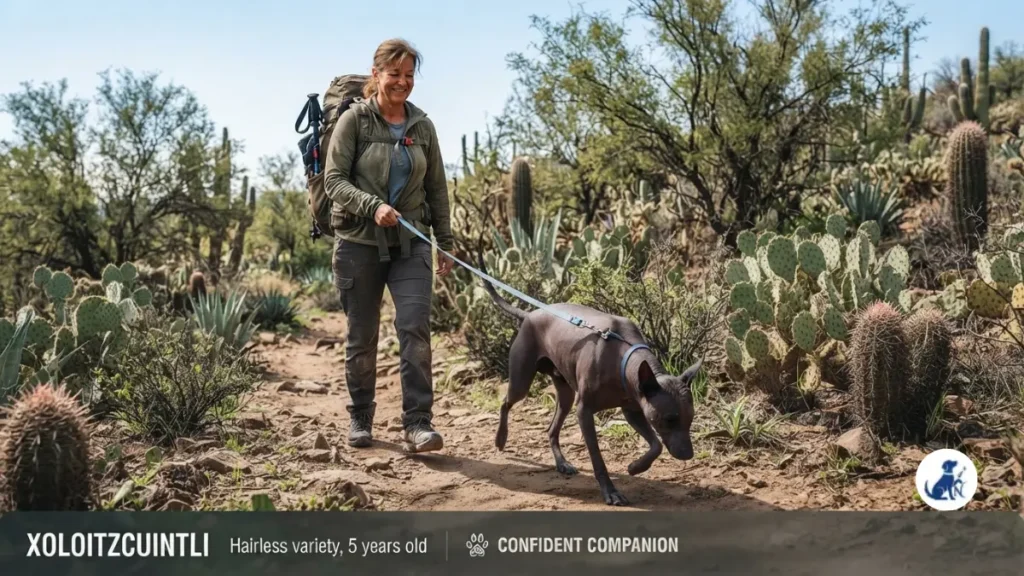
The Xoloitzcuintli has moderate exercise requirements and thrives when physical activity is combined with mental enrichment.
Regular exercise helps maintain:
- Healthy body weight
- Strong muscles
- Emotional well-being
- Appropriate household behavior
Exercise should always be adjusted according to the dog’s age, size, and overall health.
Daily Exercise
Most healthy adult Xolos benefit from:
- Daily walks
- Interactive play sessions
- Safe opportunities to run in secure areas
- Games that encourage movement and problem-solving
Puppies should avoid excessive high-impact exercise while their bodies are still developing, while senior dogs often benefit from shorter, lower-impact walks.
Mental Stimulation
Mental exercise is just as important as physical activity.
Good enrichment options include:
- Food puzzle toys
- Scent games
- Obedience practice
- Trick training
- Hide-and-seek
These activities reduce boredom while strengthening the relationship between dog and owner.
Indoor vs. Outdoor Activity
Although Xolos enjoy spending time outdoors, they are generally happiest when they live indoors with their family.
Outdoor exercise should always be balanced with appropriate weather protection, fresh water, and time to relax indoors afterward.
This combination supports both physical health and emotional well-being.
Training a Xoloitzcuintli
The Xoloitzcuintli is intelligent, observant, and capable of learning quickly. However, its primitive heritage also gives it an independent mindset. Rather than blindly following commands, many Xolos prefer to think before responding.
This doesn’t make the breed difficult—it simply means training should focus on building trust, consistency, and motivation instead of relying on punishment or force.
Intelligence
Xolos are highly perceptive dogs that quickly learn routines and recognize patterns.
Their intelligence allows them to:
- Learn household rules quickly
- Recognize familiar schedules
- Solve simple problems
- Remember commands through regular practice
Because they learn rapidly, training remains more effective when lessons stay interesting and varied instead of becoming repetitive.
Socialization
Early socialization is one of the most important investments you can make in your Xolo’s future behavior.
During puppyhood, gradually introduce your dog to:
- People of different ages
- Friendly vaccinated dogs
- New environments
- Everyday household sounds
- Different walking surfaces
- Car rides
- Veterinary visits
- Grooming routines
Positive experiences during this stage help develop a confident adult dog that can adapt comfortably to new situations.
Positive Reinforcement
Reward-based training produces the best long-term results for this breed.
Effective rewards include:
- Small training treats
- Verbal praise
- Favorite toys
- Play sessions
- Affection
Keeping sessions short, positive, and consistent encourages enthusiasm while strengthening the relationship between owner and dog.
Common Training Challenges
Like many intelligent breeds, Xolos may occasionally:
- Become bored with repetitive lessons
- Remain cautious around unfamiliar people
- Test boundaries during adolescence
- Lose interest if training becomes inconsistent
These behaviors are usually manageable through patience, routine, positive reinforcement, and realistic expectations.
Owners interested in developing long-term obedience may also benefit from learning more about Positive Reinforcement Training, which complements this breed’s sensitive and intelligent nature.
Feeding & Nutrition
A balanced diet helps support healthy skin, strong muscles, normal growth, and overall well-being throughout every stage of a Xoloitzcuintli’s life.
Because nutritional needs vary between individuals, feeding plans should always consider:
- Age
- Size
- Activity level
- Body condition
- Overall health
Most healthy Xolos thrive on a complete and balanced commercial dog food appropriate for their life stage.
Nutritional Needs
A quality diet should provide:
- High-quality protein
- Healthy fats
- Essential vitamins and minerals
- Appropriate calorie levels
- Constant access to clean drinking water
Rather than selecting food based solely on marketing claims, choose a diet suited to your dog’s individual needs.
Puppy Feeding
Growing puppies require additional calories and nutrients to support healthy development.
General recommendations include:
- Feed a diet formulated specifically for puppies.
- Divide food into several meals each day.
- Monitor healthy growth instead of encouraging rapid weight gain.
- Change foods gradually to avoid digestive upset.
Routine veterinary checkups help ensure puppies continue growing at a healthy rate.
Adult Feeding
Healthy adult Xolos generally do well with measured meals served on a consistent schedule.
This approach helps owners:
- Maintain a healthy body weight
- Monitor appetite
- Reduce overeating
- Notice unusual appetite changes sooner
Senior Feeding
As dogs grow older, calorie requirements often decrease while nutritional quality remains just as important.
Senior Xolos may benefit from:
- Careful portion control
- High-quality protein
- Weight monitoring
- Veterinary dietary advice if health conditions develop
Regular wellness examinations become increasingly valuable during the senior years.
Weight Management
Maintaining a healthy body condition supports mobility and overall health.
Owners should regularly check for:
- A visible waistline
- Easily felt ribs beneath a thin layer of fat
- Stable body weight
- Normal energy levels
If you’re uncertain whether your dog is overweight or underweight, your veterinarian can perform a body condition assessment.
Life-Stage Care
Puppy Care
The first year plays a major role in shaping a confident, healthy adult dog.
Priorities include:
- Early socialization
- Positive reinforcement training
- Safe exploration of new environments
- Routine veterinary visits
- Balanced nutrition
- Plenty of supervised play and rest
Adult Care
Healthy adults benefit from a consistent routine that includes:
- Daily exercise
- Mental enrichment
- Preventive veterinary care
- Regular grooming
- Healthy weight management
Maintaining these habits helps support long-term physical and emotional well-being.
Senior Care
Older Xolos often remain active, but their needs gradually change.
Support healthy aging by:
- Adjusting exercise to match mobility
- Monitoring body condition
- Scheduling regular veterinary examinations
- Providing comfortable sleeping areas
- Watching for changes in appetite, movement, or behavior
Xoloitzcuintli Health
The Xoloitzcuintli is generally considered a healthy breed, particularly when responsibly bred and given appropriate preventive care. Like every breed, however, it has health considerations that owners should understand before bringing one home.
Routine veterinary care, balanced nutrition, and healthy lifestyle habits all contribute to a longer and healthier life.
Lifespan
The Xoloitzcuintli typically lives between 13 and 18 years.
Although genetics influence longevity, owners can support healthy aging by providing:
- Balanced nutrition
- Regular exercise
- Preventive veterinary care
- Good dental hygiene
- Healthy weight management
Common Health Concerns
While many Xolos remain healthy throughout life, some may experience:
- Skin irritation
- Sunburn in the hairless variety
- Clogged hair follicles
- Dental abnormalities associated with the hairless gene
- Minor skin injuries
Understanding these possibilities allows owners to recognize potential problems early without assuming every dog will develop them.
Skin Health
Healthy skin requires regular observation rather than complicated routines.
Owners should:
- Inspect exposed skin regularly.
- Watch for redness or irritation.
- Check for cuts after outdoor activities.
- Protect skin from prolonged sun exposure.
- Contact a veterinarian if skin changes persist or worsen.
Dental Health
Hairless Xolos may naturally have fewer or differently shaped teeth because the genetic trait responsible for hairlessness can also influence dental development.
A healthy dental routine includes:
- Regular tooth brushing
- Veterinary dental examinations
- Professional cleanings when recommended
Good dental care supports overall health as well as oral comfort.
Preventive Veterinary Care
Preventive care often identifies health concerns before they become more serious.
A routine wellness plan generally includes:
- Veterinary examinations
- Vaccinations as recommended
- Parasite prevention
- Dental evaluations
- Weight monitoring
- Age-appropriate health screening
Veterinary Health Testing
If you plan to purchase a puppy, ask breeders about the health testing completed on the breeding dogs.
Responsible breeders should be willing to discuss:
- Recommended breed health screening
- Family health history
- Temperament of the breeding dogs
- Veterinary records when appropriate
- Results of any available health evaluations
Although health testing cannot guarantee that every puppy will remain free of disease, it demonstrates a commitment to responsible breeding practices and helps buyers make informed decisions.
Living With a Xoloitzcuintli
The Xoloitzcuintli thrives when it is treated as a valued member of the family rather than simply a household pet.
Providing a predictable routine, regular companionship, and appropriate mental stimulation helps many Xolos develop into calm, confident adults.
Daily Routine
Most adult Xolos benefit from a schedule that includes:
- Morning walk
- Interactive play
- Short training session
- Regular meal times
- Quiet family time
- Evening exercise
- Plenty of uninterrupted rest
Consistency helps many dogs feel secure while reducing stress and unwanted behaviors.
Seasonal Care
Changing seasons affect this breed more than many others, especially the hairless variety.
During warmer months:
- Limit prolonged exposure to intense sunlight.
- Provide shade and fresh water.
- Check the skin after outdoor activities.
During colder months:
- Reduce unnecessary exposure to freezing temperatures.
- Use protective clothing when appropriate.
- Dry the skin thoroughly after rain or snow.
- Monitor for signs of dry or irritated skin.
Travel Considerations
Many Xolos travel comfortably when introduced gradually.
Before leaving home:
- Pack enough food and fresh water.
- Bring any necessary skin-care supplies.
- Schedule breaks during long trips.
- Carry veterinary records when traveling long distances.
- Never leave your dog unattended inside a parked vehicle.
Responsible Breeder vs. Rescue
Whether you choose a breeder or adopt through a rescue organization, responsible decision-making benefits both you and the breed.
When working with a breeder:
- Ask about recommended health screening.
- Request available health documentation.
- Meet the puppy’s parents whenever possible.
- Observe the dogs’ temperament.
- Avoid breeders unwilling to answer questions openly.
When adopting through a rescue:
- Learn as much as possible about the dog’s history.
- Allow time for adjustment.
- Schedule a veterinary examination after adoption.
Xoloitzcuintli Pros and Cons
Every dog breed has strengths and challenges. Understanding both helps you decide whether the Xoloitzcuintli matches your expectations and lifestyle.
| Pros | Cons |
|---|---|
| Loyal and devoted to family | Reserved with strangers without early socialization |
| Intelligent and quick to learn | Requires patient, consistent training |
| Generally low shedding | Hairless variety needs regular skin care |
| Available in three sizes | Sensitive to extreme weather |
| Moderate exercise needs | Can become bored without mental stimulation |
| Usually quiet indoors | May dislike being left alone for long periods |
| Long average lifespan | Rare breed that may take time to find responsibly |
| Naturally alert watchdog | Not the easiest fit for every first-time owner |
For owners who appreciate an intelligent, affectionate companion and are prepared to meet the breed’s grooming and training needs, the advantages often outweigh the challenges. Those seeking a completely independent or maintenance-free dog may be happier with a different breed.
Should You Get a Xoloitzcuintli?
The Xoloitzcuintli is a rewarding breed for owners who understand its personality and care requirements. Rather than choosing one because of its unusual appearance alone, it’s important to consider whether its temperament, exercise needs, and daily care fit your lifestyle.
Selecting the right breed is one of the most important decisions a future dog owner can make. Taking time to evaluate your household now can help prevent problems later.
Ideal Homes
A Xoloitzcuintli is often an excellent choice for people who:
- Want a loyal companion that enjoys close family relationships
- Prefer a calm, observant dog over an overly social one
- Can provide daily exercise and mental enrichment
- Enjoy training through positive reinforcement
- Understand the extra skin-care needs of the hairless variety
- Are looking for a generally low-shedding breed
Homes That May Struggle
This breed may be less suitable for households that:
- Leave dogs alone for long periods every day
- Expect every dog to immediately welcome strangers
- Want a pet that requires very little interaction or training
- Prefer a dog that can comfortably live outdoors year-round
- Are unwilling to provide regular grooming or skin care
Questions to Ask Before Bringing One Home
Before choosing a Xoloitzcuintli, ask yourself:
- Can I provide daily exercise and mental stimulation?
- Am I prepared for regular skin or coat care?
- Can I commit to early socialization and positive training?
- Am I financially prepared for routine veterinary care?
- Does my schedule allow enough time with my dog?
- Have I researched responsible breeders or reputable rescue organizations?
- Does my household understand the responsibilities of dog ownership?
Answering these questions honestly helps determine whether the Xoloitzcuintli is likely to thrive in your home.
30-Second Decision Summary
The Xoloitzcuintli may be the right breed for you if you:
- Want a loyal companion that bonds closely with its family
- Prefer a calm, intelligent, and observant dog
- Can provide daily companionship, exercise, and training
- Are comfortable with regular skin care if choosing the hairless variety
- Appreciate a rare, ancient breed with moderate exercise needs
You may want to consider another breed if you:
- Need a dog that is comfortable spending long hours alone
- Want a pet with minimal training requirements
- Expect every dog to be naturally outgoing with strangers
- Prefer a breed that requires little ongoing grooming or skin maintenance
Frequently Asked Questions
Is a Xoloitzcuintli a good family dog?
Yes. A well-socialized Xoloitzcuintli is typically loyal, affectionate, and protective of its family. It generally thrives when included in everyday family life.
Are Xoloitzcuintli good with children?
They can be. Most Xolos do well with respectful children when introduced properly and supervised during interactions.
Do Xoloitzcuintli get along with cats?
Many do, especially when they grow up together or are introduced gradually using positive reinforcement.
Are Xoloitzcuintli good with other dogs?
Generally, yes. Early socialization helps them develop appropriate behavior around other dogs.
Do Xoloitzcuintli shed?
Hairless Xolos shed very little because they have little or no body hair. Coated Xolos also tend to shed lightly compared with many other breeds.
Are Xoloitzcuintli hypoallergenic?
No. No dog breed is completely hypoallergenic. Although some people with allergies tolerate Xolos better than heavier-shedding breeds, individual reactions vary.
Are Xolos easy to train?
They are intelligent but independent thinkers. Consistent, reward-based training usually produces the best long-term results.
How much exercise does a Xoloitzcuintli need?
Most healthy adults benefit from daily walks, interactive play, and mental enrichment. The exact amount depends on the dog’s age, size, and overall health.
Key Takeaways
The Xoloitzcuintli is one of the world’s oldest dog breeds and remains a unique combination of intelligence, loyalty, and calm companionship. Available in both hairless and coated varieties and in three different sizes, it can adapt well to many homes when owners understand its specific needs.
Although the breed is generally low shedding, responsible ownership involves more than choosing a dog with less hair. Regular training, early socialization, balanced nutrition, preventive veterinary care, appropriate exercise, and consistent grooming all contribute to a healthy and well-adjusted Xolo.
For owners willing to invest time and care, the Xoloitzcuintli offers years of devoted companionship and a close bond that few breeds match.
Continue exploring topics such as Hairless Dog Breeds, Primitive Dog Diet, Dog Skin Care, and Positive Reinforcement Training to make informed decisions about responsible dog ownership.