
Introduction
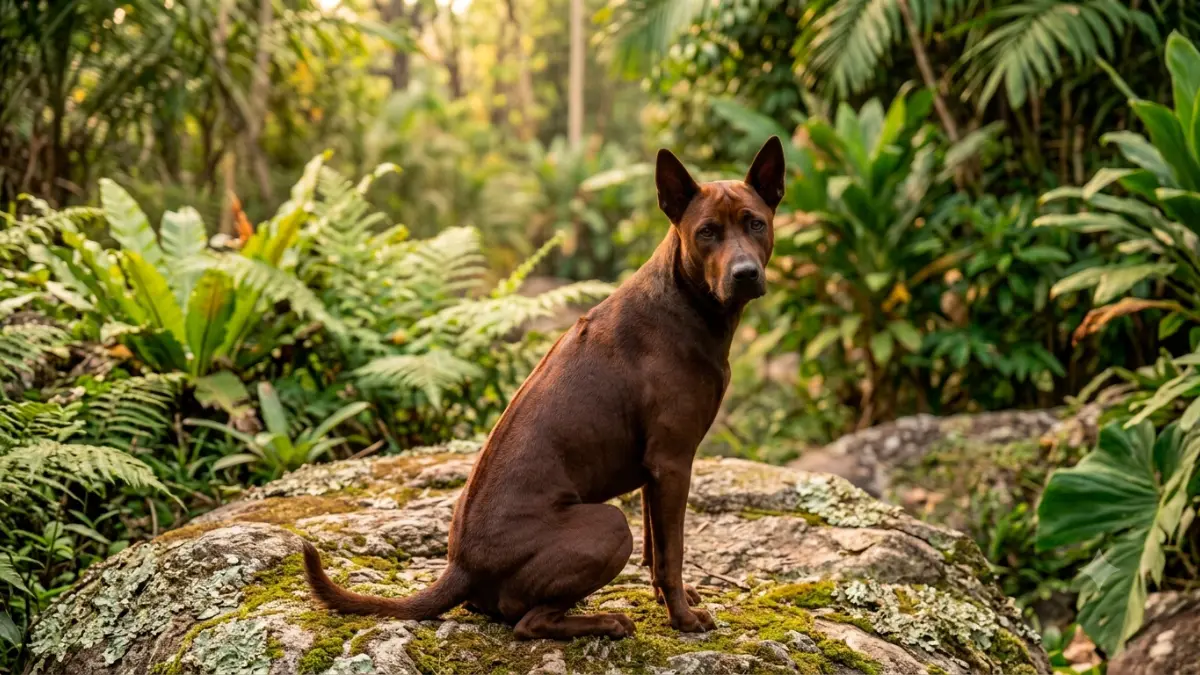
The Thai Ridgeback is not a breed that blends into the background.
It stands out immediately because of its ridge—a strip of hair growing in the opposite direction along its back. But the real story of this dog has very little to do with appearance.
This is a primitive dog breed, shaped by survival, function, and independence rather than modern companion-focused breeding. That history still defines how it behaves today.
Unlike many modern dogs that are bred to follow human direction automatically, the Thai Ridgeback tends to evaluate first and respond second. It does not blindly obey—it assesses, processes, and then decides.
This single trait changes everything about ownership.
Many people mistake this behavior for stubbornness. In reality, it is independent thinking rooted in instinct, not defiance.
What Is a Thai Ridgeback?
The Thai Ridgeback is one of the few naturally ridge-backed dog breeds in the world, alongside the Rhodesian Ridgeback.
It originated in Thailand, where it was used as a working dog for hunting, guarding, and independent survival tasks in rural environments. It often had to make decisions without human guidance.
Because of this background, it still carries strong landrace breed traits, meaning it was shaped more by natural selection and function than controlled breeding standards.
This is not a decorative companion dog. It is a working, thinking, decision-making breed that happens to live in modern homes.
Quick Breed Overview
| Trait | Thai Ridgeback |
|---|---|
| Origin | Thailand |
| Type | Primitive / Working |
| Size | Medium to Large |
| Weight | 35–75 lbs |
| Lifespan | 12–15 years |
| Energy Level | High but focused |
| Grooming | Low |
| Trainability | Moderate to challenging |
| Stranger Behavior | Naturally reserved |
| First-Time Owners | Not recommended |
Temperament
The Thai Ridgeback is often described as independent, but that word barely explains its behavior.
This is a dog that does not automatically follow human instructions. It listens, understands, and then decides whether the request makes sense in that moment.
With family, the breed is calm and observant. It does not demand constant attention, but it stays aware of everything happening around it.
With strangers, it becomes cautious. Not aggressive by default, but reserved and evaluative.
This behavior is not random. It is deeply rooted in its primitive working background.
Are Thai Ridgebacks Aggressive?
No, they are not naturally aggressive.
However, they are naturally cautious and territorial.
Aggression and caution are not the same thing.
A well-socialized Thai Ridgeback is typically calm, stable, and controlled. But it does not extend trust quickly to unfamiliar people.
With proper training and early socialization, this trait becomes balanced rather than reactive.
Early Ownership Reality
The most important truth about this breed is simple.
It does not automatically follow humans.
It observes them.
This is why experiences with the Thai Ridgeback vary so widely. Some owners describe a deeply intelligent, loyal companion. Others describe a difficult, overly independent dog.
Both experiences are valid. The difference is not the dog.
It is the match between expectation and reality.
Training Reality
Training a Thai Ridgeback is not about teaching commands—it is about building cooperation.
This breed learns quickly, but obedience depends on trust and context.
A command is not ignored because the dog doesn’t understand it. It is ignored because the dog is deciding whether it agrees.
That pause is one of the most defining traits of the breed.
What Works Best
The Thai Ridgeback responds best to calm, structured, and predictable handling.
Effective training usually includes:
- short, focused sessions
- consistent daily rules
- reward-based reinforcement
- low-emotion communication
- clear boundaries across all family members
This breed does not respond well to confusion or mixed signals. If rules change frequently, behavior becomes inconsistent.
Common Training Challenges
Selective Response Behavior
The dog may respond perfectly in one environment and ignore cues in another. This is not confusion—it is context evaluation.
Prey Drive Interference
Fast movement from animals or sudden stimuli can override recall training in outdoor environments.
Independence vs Obedience Expectation
Many owners expect automatic obedience. The Thai Ridgeback does not operate that way. It evaluates before responding.
Exercise Needs
The Thai Ridgeback is not endlessly hyperactive, but it has strong bursts of controlled energy.
Most adult dogs need around 60–90 minutes of daily activity, combined with mental stimulation.
Without proper exercise, behavior does not disappear—it shifts.
It often appears as:
- restlessness indoors
- alert scanning behavior
- territorial sensitivity
- increased reactivity to movement
Best Types of Exercise
Not all activity works equally well for this breed.
More effective options include:
- structured off-leash running in secure areas
- scent tracking games
- controlled chase-based play
- long exploratory walks with engagement
The goal is not exhaustion. The goal is mental and physical balance.
Mental Stimulation Matters
A physically tired Thai Ridgeback is not necessarily a settled one.
Without mental engagement, the dog may remain alert and reactive even after exercise.
Mental work includes:
- problem-solving games
- pattern recognition tasks
- structured exploration activities
This helps channel instinct instead of suppressing it.
Living With a Thai Ridgeback
This breed can adapt to different living environments, but adaptation is not the same as comfort.
In apartments, constant exposure to:
- strangers
- noises
- shared spaces
can increase alertness levels.
A house with secure fencing can reduce exposure, but it does not replace structure or training.
The Yard Misconception
A common belief is that a large yard solves behavior issues.
It does not.
A yard only provides space, not:
- guidance
- structure
- engagement
- mental stimulation
Without these, behavioral issues may still develop quietly.
Diet & Feeding
The Thai Ridgeback has a lean, athletic body that requires balanced nutrition rather than excessive feeding.
Most adults eat around 2–4 cups of quality dog food per day, divided into two meals.
Key Nutrition Principles
- body condition is more important than exact quantity
- overfeeding is a common issue
- lean muscle structure should be maintained
- energy levels depend on diet quality, not just volume
A healthy Thai Ridgeback should look athletic, not bulky.
Common Feeding Mistakes

Overfeeding Due to Muscular Build
Because the breed looks strong, owners often assume it needs more food than it actually does.
This can lead to slow weight gain that affects joints over time.
Ignoring Food Quality
Not all calories are equal. Digestibility and protein quality matter more than quantity alone.
Grooming
One of the easier aspects of this breed is coat maintenance.
The coat is short, functional, and low-shedding compared to many breeds.
Basic Grooming Needs
- weekly brushing
- occasional bathing
- nail trimming
- dental care
- ear checks
This is a low-maintenance grooming breed, but not a no-maintenance one.
Health Overview
The Thai Ridgeback is generally considered a hardy and naturally resilient breed. Its development was shaped more by survival and function than extreme selective breeding, which contributes to its overall physical toughness.
However, no breed is free from health concerns.
Dermoid Sinus
One of the most important breed-related conditions is dermoid sinus, which is associated with ridge-backed dogs.
This condition involves abnormal skin tube development along the spine. Severity can vary widely, from mild cases to situations that require surgical correction.
Responsible breeding practices aim to reduce this risk through careful selection.
Hip Health Concerns
Like many active medium-to-large breeds, hip dysplasia can occur.
Key influencing factors include:
- genetics
- growth rate during puppy stage
- body weight management
- exercise intensity during development
Balanced growth and controlled activity during early life play an important role.
General Sensitivity and Risks
Some individuals may show mild skin sensitivities or environmental reactions, but these are not defining traits of the breed.
Like all deep-chested athletic dogs, bloat risk should also be understood. It is a serious condition requiring immediate veterinary attention if symptoms appear.
Thai Ridgeback Price
In the United States, a Thai Ridgeback puppy from a reputable breeder typically costs between $1,500 and $4,000+.
However, price alone does not define accessibility.
Availability and breeder quality are often the real limiting factors.
Why Prices Vary
Several factors influence cost:
Ethical Breeding Practices
Responsible breeders invest in:
- health testing
- temperament evaluation
- early socialization
- careful breeding selection
These practices increase cost but improve long-term stability.
Imported or Rare Bloodlines
Some dogs come from imported lineage or limited breeding programs, which increases price due to logistics and rarity.
Limited Population
The breed is still rare in many regions, especially in the United States. Limited supply naturally increases cost.
First-Year Ownership Cost
Beyond purchase price, the first-year cost often ranges between $3,500 to $7,000+, depending on:
- veterinary care
- training
- food quality
- setup requirements
- general maintenance
Thai Ridgeback Puppies

Thai Ridgeback puppies often appear social, curious, and adaptable in early development stages.
However, as maturity develops, instinct-driven behavior becomes more visible.
This transition is natural and not a behavior change caused by environment alone. It is the emergence of the breed’s underlying structure.
Many owners experience a mismatch during this stage—not because the dog changes, but because its true nature becomes clearer.
Thai Ridgeback vs Rhodesian Ridgeback
While both breeds share the ridge trait, their behavior and temperament differ significantly.
The Rhodesian Ridgeback tends to be more socially adaptable and easier to manage in varied environments.
The Thai Ridgeback is generally:
- more reserved
- more independent in decision-making
- more internally focused
- more selective with trust
Both breeds are intelligent, but they express intelligence differently.
Key Differences Table
| Trait | Thai Ridgeback | Rhodesian Ridgeback |
|---|---|---|
| Social Style | Reserved | More open |
| Independence | Very high | High |
| Trainability | Selective | More cooperative |
| Prey Drive | Strong | Strong |
| Beginner Friendly | No | Moderate |
Pros and Cons
Advantages
- strong loyalty to family
- low grooming requirements
- natural guarding instinct
- athletic and intelligent structure
Challenges
- not beginner-friendly
- strong independent thinking
- selective obedience
- high prey drive
- requires consistent structure
Who This Breed Is Best For
The Thai Ridgeback is best suited for owners who understand and accept independent canine behavior.
It fits well with people who:
- prefer structured routines
- understand dog psychology
- are patient with training progress
- can maintain consistent leadership
- do not expect automatic obedience
This is not a casual companion breed.
It is a commitment-based breed.
Final Expert Verdict
The Thai Ridgeback is not designed for convenience or predictability.
It is a primitive working breed shaped by survival, awareness, and independent decision-making.
It does not blindly follow human direction. It evaluates it.
That trait can feel challenging to inexperienced owners, but deeply rewarding to those who understand it.
With the right approach, the relationship becomes less about control and more about cooperation.
Not obedience for its own sake—but mutual understanding built over time.
Final Perspective
The Thai Ridgeback remains one of the most distinctive primitive breeds in the modern dog world.
It is intelligent, alert, independent, and highly aware of its environment.
This is not a breed that exists to obey without question. It exists to think, assess, and respond with intent.
For the right owner, that creates a powerful and respectful bond.
For the wrong owner, it creates frustration.
The difference is not the dog.
It is understanding, expectation, and readiness.
Frequently Asked Questions
Q: What makes a Thai Ridgeback different from other dog breeds?
A Thai Ridgeback stands out because it doesn’t rely on constant human direction. It evaluates situations before responding, which comes from its primitive working background. This makes it more independent, observant, and less predictable than many modern companion breeds.
Q: Why are Thai Ridgebacks considered difficult for beginners?
They are considered difficult for beginners because they don’t follow commands automatically. Instead, they decide whether a command makes sense in a given context. This requires experience in dog handling, consistency, and understanding of independent canine behavior.
Q: Are Thai Ridgebacks actually aggressive or just misunderstood?
They are usually misunderstood rather than aggressive. The breed is naturally cautious and highly territorial, so it observes strangers before accepting interaction. Without proper socialization, this behavior can be misread as aggression.
Q:Why do Thai Ridgeback puppies cost so much?
They cost more because of rarity, ethical breeding standards, and limited availability. Reputable breeders also invest heavily in health testing, temperament screening, and responsible breeding practices, which increases the final price.
Q: How much exercise does a Thai Ridgeback really need?
Most Thai Ridgebacks need around 60 to 90 minutes of daily exercise plus mental stimulation. Without this balance, the dog may remain mentally alert even after physical activity, which can lead to restlessness.