
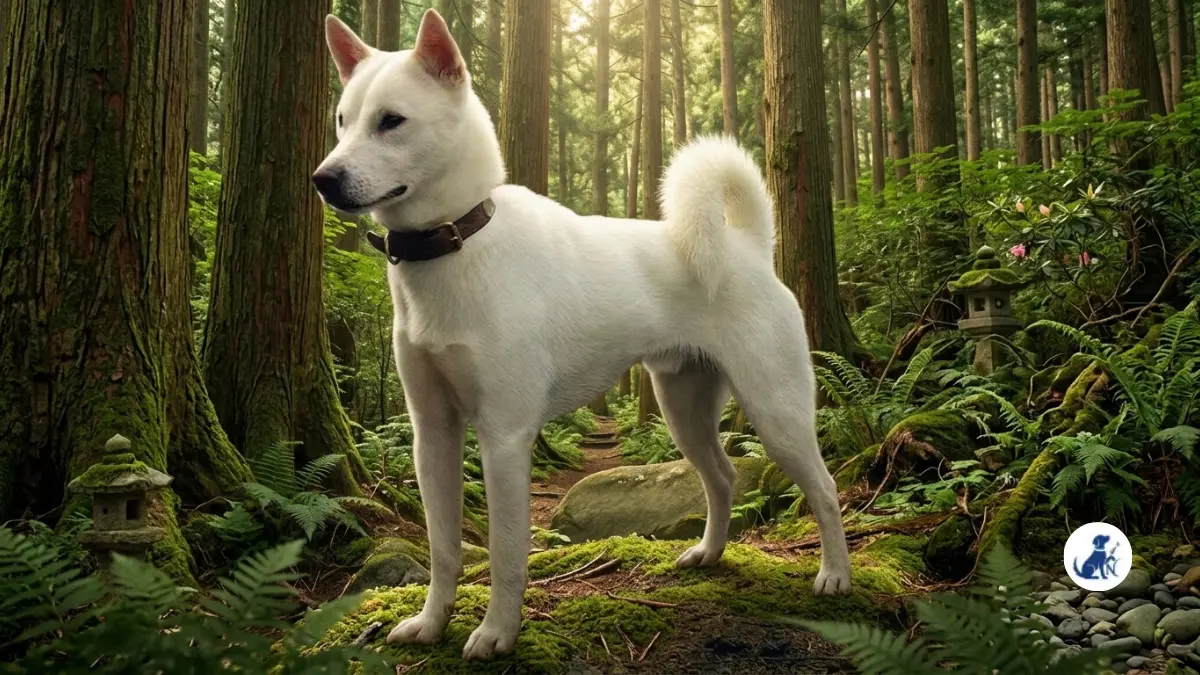
Kishu Ken at a Glance
| Trait | Details |
|---|---|
| Origin | Japan |
| Breed Type | Primitive hunting dog |
| Size | Medium |
| Height | 17–22 inches (43–56 cm) |
| Weight | 30–60 pounds (14–27 kg) |
| Life Expectancy | 11–13 years |
| Coat | Short, dense double coat |
| Colors | White, Red, Sesame |
| Energy Level | High |
| Shedding | Moderate to heavy (seasonal) |
| Trainability | Intelligent but independent |
| Good for First-Time Owners | Usually No |
| Best For | Active individuals and experienced dog owners |
What Is a Kishu Ken?
The Kishu Ken is one of Japan’s oldest native dog breeds, originally developed to hunt wild boar and deer across the rugged mountains of the historic Kii Peninsula. Unlike many modern breeds that were selectively bred for companionship or appearance, the Kishu Ken was shaped almost entirely by function, endurance, and survival.
This difference still defines the breed today.
A Kishu Ken isn’t naturally eager to please everyone it meets. Instead, it tends to form deep, lasting bonds with its family, remain reserved around strangers, and approach unfamiliar situations with calm confidence rather than impulsive reactions.
That independent personality can surprise first-time owners who expect immediate obedience. However, people familiar with primitive working breeds often value this thoughtful nature because it reflects generations of selective breeding rather than stubbornness.
Although the breed is still relatively rare outside Japan, interest in the Kishu Ken has grown among owners looking for an athletic, intelligent companion with a rich cultural history and a more natural temperament than many modern dog breeds.
Why the Kishu Ken Is Different From Most Dog Breeds
One of the biggest misconceptions is that every medium-sized hunting dog behaves in roughly the same way.
The Kishu Ken proves otherwise.
Unlike many sporting breeds that were developed to work closely under constant human direction, the Kishu Ken often hunted in situations where independent judgment was essential. A dog chasing a dangerous wild boar through dense mountain forests couldn’t wait for instructions every few seconds. It had to assess the terrain, react to changing conditions, and make safe decisions on its own.
That heritage explains many modern breed traits, including:
- Exceptional focus while working
- Quiet confidence instead of constant excitement
- Strong problem-solving ability
- Deep loyalty toward trusted family members
- Natural caution around unfamiliar people
- A powerful instinct to chase moving animals
Understanding this historical purpose helps owners set realistic expectations. Many behaviors that inexperienced owners label as “stubborn” are actually the result of centuries of breeding for independence.
History and Origin
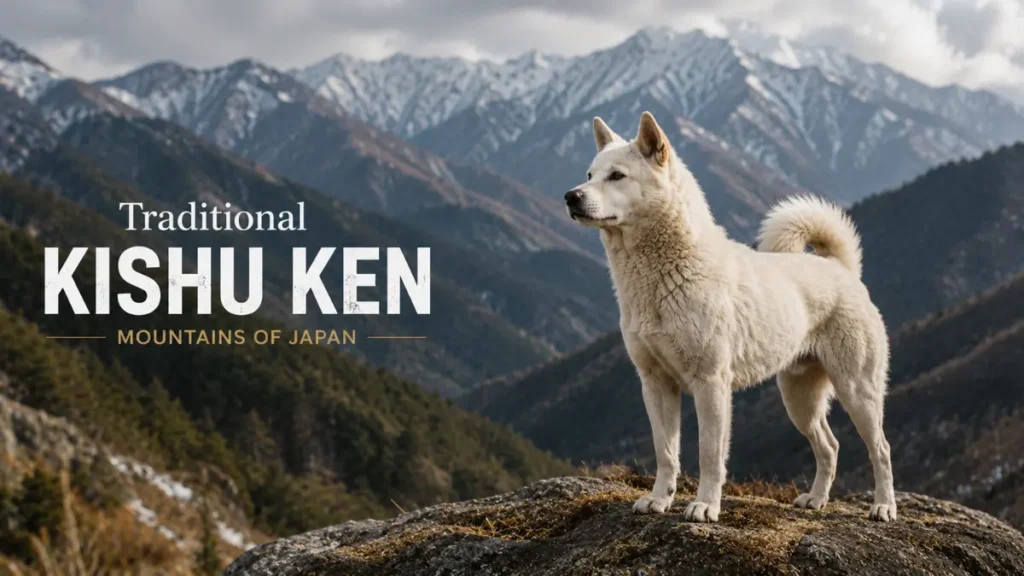
A Breed Born in Japan’s Mountain Wilderness
The Kishu Ken takes its name from the historic Kishu region, which today includes parts of Wakayama and Mie Prefectures in Japan. This region is known for its steep mountains, thick forests, and rugged terrain—an environment that demanded extraordinary hunting dogs.
Long before formal breed standards existed, local hunters bred dogs based almost entirely on performance.
Dogs that demonstrated courage, endurance, intelligence, and reliable hunting ability were bred. Dogs that lacked those qualities generally were not.
Appearance mattered far less than performance.
Over many generations, this practical selection produced a remarkably balanced hunting dog capable of tracking large game through difficult terrain while remaining physically efficient and mentally composed.
Unlike many modern breeds whose appearance changed significantly through selective breeding for dog shows, the Kishu Ken has remained surprisingly close to its original working form.
Hunting Was More Than a Tradition
To understand the Kishu Ken, it’s important to understand the environment that created it.
For centuries, hunting wasn’t simply recreation in rural Japan—it was often necessary for food, protection of farmland, and community survival.
Wild boar could destroy crops within hours, while deer populations also affected agriculture. Hunters needed dogs capable of locating game, following difficult scent trails, and holding animals in place until people arrived.
The Kishu Ken excelled because it combined:
- Athletic endurance
- Excellent scenting ability
- Physical courage
- Calm decision-making
- Quiet concentration
Unlike breeds that bark continuously during a hunt, the Kishu Ken often works with remarkable silence. That controlled hunting style remains one of the breed’s defining characteristics today.
A National Treasure Worth Protecting
During the late nineteenth and early twentieth centuries, imported European breeds became increasingly popular throughout Japan. Crossbreeding threatened the survival of several native Japanese dogs, including the Kishu Ken.
Recognizing their historical and cultural importance, Japanese preservation groups began protecting native breeds through organized breeding programs.
The goal wasn’t to create a more fashionable dog.
Instead, preservation focused on maintaining the breed’s original working ability, sound structure, and stable temperament.
Those efforts helped ensure that today’s Kishu Ken still reflects the qualities that made it successful hundreds of years ago.
Physical Characteristics
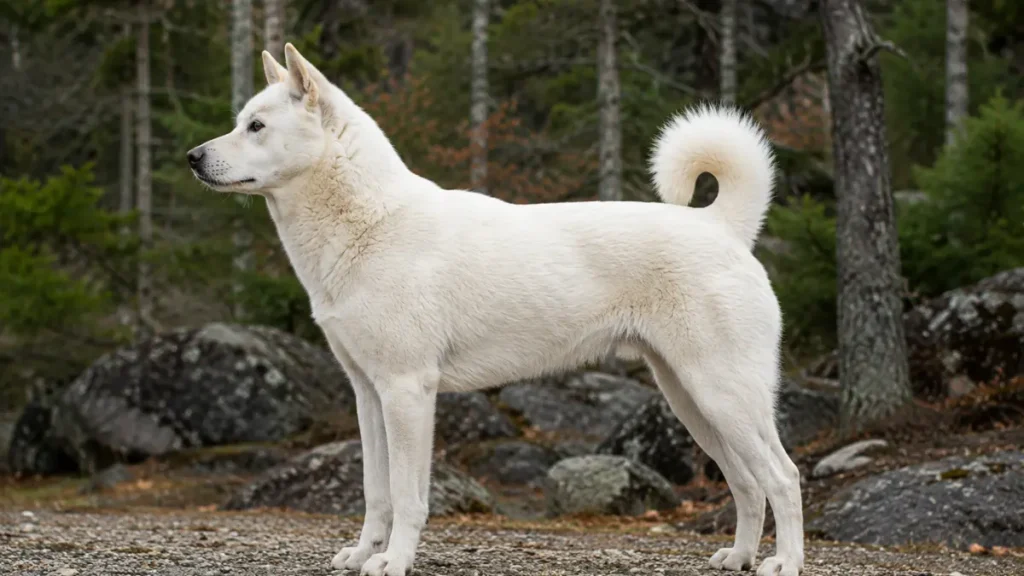
The Kishu Ken doesn’t rely on exaggerated features to stand out.
Its appearance reflects efficiency rather than decoration.
Everything from the shape of its head to the structure of its body serves a practical purpose developed through generations of demanding work.
Size
The Kishu Ken is a medium-sized breed with an athletic, balanced build.
Healthy adults should appear lean, agile, and well-muscled rather than bulky.
Males are generally larger than females, but both sexes display the same overall impression of strength without unnecessary heaviness.
This moderate size allows the breed to travel efficiently across rough terrain while maintaining excellent stamina.
Head and Expression
One of the first things people notice is the breed’s alert yet composed expression.
The Kishu Ken has:
- A broad, wedge-shaped head
- Upright triangular ears
- Dark, attentive eyes
- A strong muzzle
- Well-developed jaws
Unlike some companion breeds that appear highly expressive, the Kishu Ken often seems thoughtful and observant.
Many experienced owners describe the breed as constantly assessing its surroundings rather than reacting impulsively.
Body Structure
Every part of the Kishu Ken’s body reflects functional breeding.
Its physical structure includes:
- A deep chest for endurance
- Strong shoulders
- Straight, well-supported back
- Muscular hindquarters
- Balanced proportions
- Efficient movement
These characteristics help explain why the breed remains capable of covering long distances without tiring quickly.
Rather than displaying exaggerated speed or power, the Kishu Ken demonstrates efficient athleticism—a valuable trait for dogs expected to work for hours in difficult conditions.
Coat and Colors
The Kishu Ken has a weather-resistant double coat consisting of a soft insulating undercoat beneath a straight, coarse outer coat.
This natural insulation protects the dog from cold temperatures, rain, and dense vegetation while hunting.
Today, white is by far the most recognized coat color.
However, the breed wasn’t originally limited to white dogs.
Historically, Kishu Ken also appeared in:
- White
- Red
- Sesame
Many historians believe white became increasingly popular because hunters could distinguish white dogs more easily from dark-colored wild boar during hunts. While this explanation is widely accepted, breeding preferences over time also contributed to white becoming the dominant color.
This distinction matters because it illustrates how the breed evolved through practical selection rather than appearance alone.
Tail
Like several other Japanese native breeds, the Kishu Ken carries its tail in either a curled or sickle-shaped position over its back.
Beyond appearance, the tail contributes to the breed’s overall balance and is one of several physical traits shared by Japan’s traditional spitz-type dogs.
Kishu Ken Temperament: Calm, Independent, and Intensely Loyal
If appearance introduces the Kishu Ken, temperament defines it.
This is not an overly emotional breed that constantly demands attention.
Instead, the Kishu Ken often shows affection through quiet companionship and unwavering loyalty.
Many owners notice that their dog prefers remaining close to trusted family members rather than seeking attention from every visitor.
That quiet attachment can easily be misunderstood by people accustomed to more openly affectionate breeds.
Deep Loyalty Without Being Clingy
The Kishu Ken usually forms especially strong bonds with one or two primary family members, although it can develop affectionate relationships with the entire household.
Its loyalty often appears through everyday behavior rather than dramatic displays.
For example, a Kishu Ken may quietly follow its owner from room to room, remain nearby while they work, or calmly observe family activities without constantly demanding interaction.
This subtle companionship is one reason experienced owners often describe the breed as deeply rewarding to live with.
Reserved Around Strangers
One of the breed’s most recognizable personality traits is its natural reserve.
A well-socialized Kishu Ken is typically:
- Calm
- Observant
- Polite
- Confident
- Selective about trust
Being reserved should never be confused with aggression.
The breed generally prefers to evaluate unfamiliar people before deciding how to respond.
This thoughtful approach reflects its working heritage, where reacting impulsively could have been dangerous during hunts.
Early socialization helps transform this natural caution into quiet confidence rather than excessive suspicion.
Confidence Rather Than Reactivity
Unlike dogs that become overly excited or anxious in unfamiliar environments, the Kishu Ken often approaches new situations with remarkable composure.
Instead of reacting first, it usually:
- Observes the environment.
- Assesses potential risks.
- Chooses an appropriate response.
This ability to remain calm under pressure made the breed valuable as a hunting companion and continues to influence its temperament today.
For modern owners, this often means living with a dog that appears thoughtful, emotionally stable, and surprisingly self-controlled.
Intelligence and Trainability
Is the Kishu Ken Easy to Train?
Short answer: The Kishu Ken is highly intelligent, but it is not naturally eager to obey. Training success depends on building trust and consistency rather than expecting instant compliance.
This distinction is one of the biggest reasons owners either fall in love with the breed—or become frustrated by it.
Unlike many modern companion breeds that were selectively bred to respond immediately to human direction, the Kishu Ken spent centuries working in situations where independent judgment often mattered more than strict obedience.
That history still influences how the breed learns today.
A Kishu Ken usually understands new commands quickly. The challenge isn’t teaching the command—it’s convincing the dog that following it is worthwhile. Owners unfamiliar with primitive breeds sometimes mistake this thoughtful decision-making for stubbornness, when in reality it reflects the breed’s original working purpose.
How the Kishu Ken Learns
The Kishu Ken responds best when training feels like a partnership rather than a series of repeated drills.
Successful owners focus on:
- Positive reinforcement
- Clear and consistent rules
- Short, engaging sessions
- Patience and repetition without frustration
- Building trust before increasing difficulty
Long, repetitive training sessions often reduce motivation. This breed tends to stay engaged when lessons are varied, rewarding, and mentally stimulating.
Owner Insight: If your Kishu Ken suddenly loses interest during training, the problem is often the session—not the dog’s intelligence. Shortening the lesson or introducing a different exercise usually produces better results than repeating the same command.
Recall Can Be Challenging
Reliable recall is one of the most difficult skills for many Kishu Ken owners.
The reason isn’t poor intelligence.
It’s the breed’s strong prey drive.
If a rabbit, squirrel, or deer suddenly appears, centuries of hunting instincts may temporarily become more rewarding than responding to your voice.
Even well-trained individuals should only be allowed off leash in securely enclosed areas unless their recall has been thoroughly tested under controlled conditions.
Training can significantly improve recall, but no training completely removes instinct.
Exercise Requirements
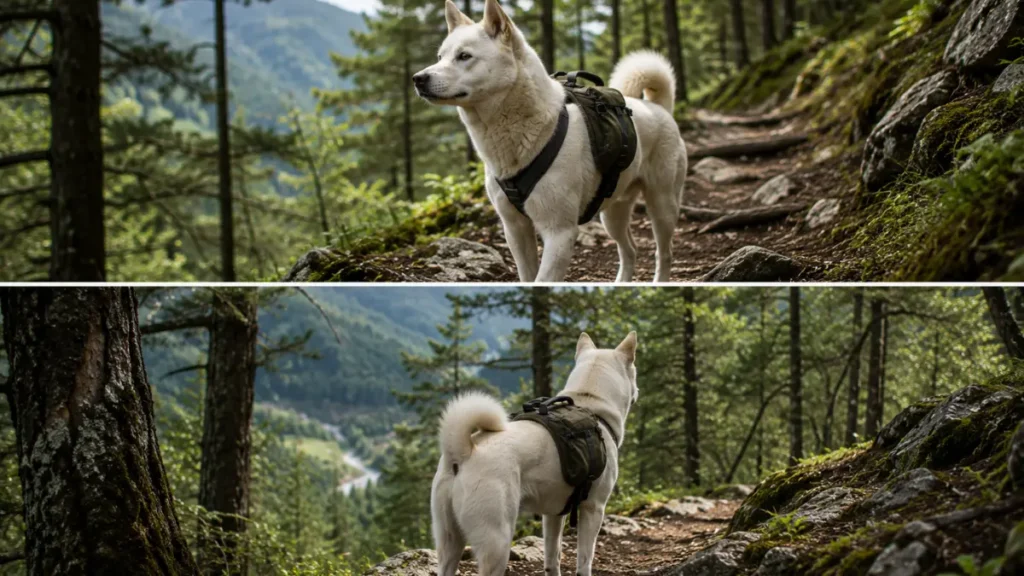
How Much Exercise Does a Kishu Ken Need?
Short answer: Most healthy adult Kishu Ken need 60 to 90 minutes of daily physical activity, along with regular mental enrichment.
Exercise isn’t simply about burning energy.
For a breed developed to travel through forests while solving problems independently, physical activity and mental stimulation work together to maintain balanced behavior.
Without enough daily activity, a Kishu Ken may become:
- Restless
- Destructive
- Easily bored
- More difficult to train
- Frustrated indoors
Many behavior problems blamed on the breed are actually the result of under-stimulation rather than temperament.
Mental Exercise Is Just as Important
Physical exercise alone rarely satisfies a Kishu Ken.
Because the breed evolved as an independent hunter, it also benefits from activities that encourage problem-solving.
Excellent enrichment activities include:
- Scent work
- Tracking games
- Puzzle feeders
- Hide-and-seek
- Advanced obedience
- Trick training
- Hiking on new trails
Exploring unfamiliar environments often provides more mental stimulation than repeating the same neighborhood walk every day.
Can the Kishu Ken Live in an Apartment?
Yes—but only under the right conditions.
Many people assume large homes automatically create happy dogs.
For the Kishu Ken, daily lifestyle matters far more than square footage.
An apartment dog receiving structured exercise, enrichment, and outdoor adventures is often healthier than a backyard dog left alone with little interaction.
That said, apartment owners should realistically evaluate whether they can consistently meet the breed’s physical and mental needs.
Living With Children and Other Pets
Are Kishu Ken Good Family Dogs?
The Kishu Ken can become an outstanding family companion when raised with appropriate socialization and realistic expectations.
Its calm nature often makes it easier to live with than many highly excitable breeds.
However, this doesn’t mean the breed tolerates rough handling.
Children should learn to:
- Respect the dog’s personal space
- Avoid disturbing it while eating or sleeping
- Handle it gently
- Recognize signs of stress or discomfort
As with any breed, interactions between young children and dogs should always be supervised.
Living With Other Dogs
Results vary depending on genetics, early socialization, and individual personality.
Many Kishu Ken live successfully with other dogs, especially when raised together.
Some adults, however, may become selective about canine companions as they mature.
Owners should avoid assuming that every Kishu Ken will enjoy busy dog parks or large groups of unfamiliar dogs.
Respecting individual temperament often leads to safer, more positive experiences.
Living With Cats and Small Pets
This is one area where realistic expectations are essential.
The Kishu Ken’s hunting background contributes to a naturally strong prey drive.
Animals that may trigger pursuit include:
- Rabbits
- Guinea pigs
- Hamsters
- Birds
- Outdoor cats
Some Kishu Ken raised alongside household cats adapt well to living together.
Others continue to view rapidly moving animals as prey despite early socialization.
Management, supervision, and secure environments remain important throughout the dog’s life.
Health
Is the Kishu Ken a Healthy Breed?
Overall, the Kishu Ken is considered one of the healthier purebred dogs.
Because breeders historically selected dogs for working ability rather than exaggerated appearance, the breed has avoided many structural problems seen in some modern breeds.
Even so, no breed is completely free from inherited health conditions.
Responsible breeders help reduce risk by performing appropriate health screening before breeding.
Hip Dysplasia
Hip dysplasia is one of the better-known orthopedic conditions that can affect medium and large breeds.
It occurs when the hip joint develops abnormally, leading to gradual wear over time.
Possible signs include:
- Difficulty standing
- Stiffness after rest
- Reduced willingness to jump
- Limping after exercise
- Changes in gait
Maintaining a healthy body weight, providing appropriate exercise during growth, and choosing puppies from health-tested parents may help reduce risk, although they cannot eliminate it entirely.
Allergies
Some Kishu Ken develop environmental or food-related allergies.
Owners may notice:
- Persistent itching
- Frequent ear infections
- Paw licking
- Skin redness
- Hair loss in affected areas
Because many skin conditions produce similar symptoms, veterinary evaluation is important before changing diets or beginning treatment.
Eye Health
Serious inherited eye disease appears relatively uncommon within the breed.
Even so, routine veterinary examinations remain valuable because early detection often improves long-term management if problems arise.
Responsible breeders may also perform recommended eye screenings before breeding.
Preventive Health Care
The healthiest Kishu Ken usually benefit from consistent preventive care rather than waiting for illness to appear.
A sensible routine includes:
- Annual veterinary examinations
- Vaccinations as recommended
- Parasite prevention
- Dental care
- Weight monitoring
- Nail maintenance
- Regular exercise
- Mental enrichment
Expert Perspective: Many long-lived working breeds owe their health not only to genetics but also to consistent preventive care throughout life.
Nutrition
Feeding the Kishu Ken
There is no single diet that suits every Kishu Ken.
Nutritional needs vary according to:
- Age
- Activity level
- Body condition
- Health status
- Reproductive status
A highly active hiking companion may require significantly more calories than a dog living a relatively quiet lifestyle.
Instead of feeding a fixed amount, owners should regularly monitor body condition and adjust portions accordingly.
Choosing a High-Quality Diet
Look for complete and balanced foods formulated for your dog’s life stage.
A quality diet should provide appropriate amounts of:
- Protein
- Healthy fats
- Vitamins
- Minerals
- Digestible carbohydrates
- Dietary fiber
Fresh water should always be available.
If you prefer preparing food at home, consult a qualified veterinary nutrition professional to ensure the diet remains nutritionally complete.
Avoid Obesity
The Kishu Ken naturally has an athletic build.
Allowing the dog to become overweight places additional stress on joints, reduces endurance, and may increase the risk of several health problems.
Maintaining a lean body condition throughout life is one of the simplest ways owners can support long-term health.
Grooming
Is the Kishu Ken High Maintenance?
Short answer: No.
Despite its dense double coat, the Kishu Ken is relatively easy to maintain compared with many long-coated breeds.
Weekly brushing is usually enough for most of the year.
During seasonal shedding periods, brushing several times each week helps remove loose undercoat before it spreads throughout the home.
Bathing
The coat naturally resists dirt and weather.
Most Kishu Ken only require occasional baths unless they become unusually dirty.
Using a mild dog shampoo helps preserve the coat’s protective oils and natural texture.
Nail, Ear, and Dental Care
Routine maintenance should include:
- Nail trimming
- Ear checks
- Tooth brushing
- Dental examinations during veterinary visits
Although these tasks seem simple, they contribute significantly to long-term health and comfort.
Climate Adaptability
The Kishu Ken’s double coat allows it to perform well in cool and cold climates.
In warmer regions, owners should:
- Exercise during cooler parts of the day
- Provide shade and fresh water
- Avoid prolonged activity in extreme heat
- Watch carefully for signs of overheating
One common misconception is that shaving a double-coated breed keeps it cooler.
In reality, the coat also helps insulate against heat and protects the skin from direct sunlight. Shaving should generally be avoided unless medically recommended by a veterinarian.
How Much Does a Kishu Ken Cost?
Kishu Ken Puppy Price
Because the Kishu Ken is still a rare breed outside Japan, finding a responsibly bred puppy often requires patience. Waiting lists are common, and reputable breeders typically prioritize health, temperament, and breed preservation over producing large numbers of puppies.
In the United States, a well-bred Kishu Ken puppy generally costs between $2,000 and $3,500, although exceptional pedigrees or imported bloodlines may increase the price.
A lower purchase price isn’t always a bargain. Puppies from breeders who skip health testing or early socialization may cost less initially but lead to higher veterinary and training expenses later.
Buying Tip: Choose a breeder based on health testing, transparency, and responsible breeding practices—not simply the lowest price.
First-Year Ownership Costs
Bringing home a puppy involves more than paying the purchase price.
Most first-year expenses include:
- Initial veterinary examinations
- Core vaccinations
- Microchipping
- Spaying or neutering (when appropriate)
- Crate and bedding
- Quality food
- Collar, leash, and harness
- Grooming supplies
- Training classes
- Toys and enrichment equipment
- Pet insurance or an emergency medical fund
Planning for these expenses helps new owners avoid unexpected financial pressure during the puppy’s first year.
Lifetime Cost of Ownership
Over its lifetime, a Kishu Ken requires ongoing investment in:
- Premium nutrition
- Preventive veterinary care
- Parasite prevention
- Dental care
- Training and enrichment
- Replacement equipment
- Emergency medical expenses
While the breed is generally healthy, responsible ownership always includes preparing for unexpected veterinary costs. Financial readiness is just as important as providing love and exercise.
Is the Kishu Ken the Right Dog for You?
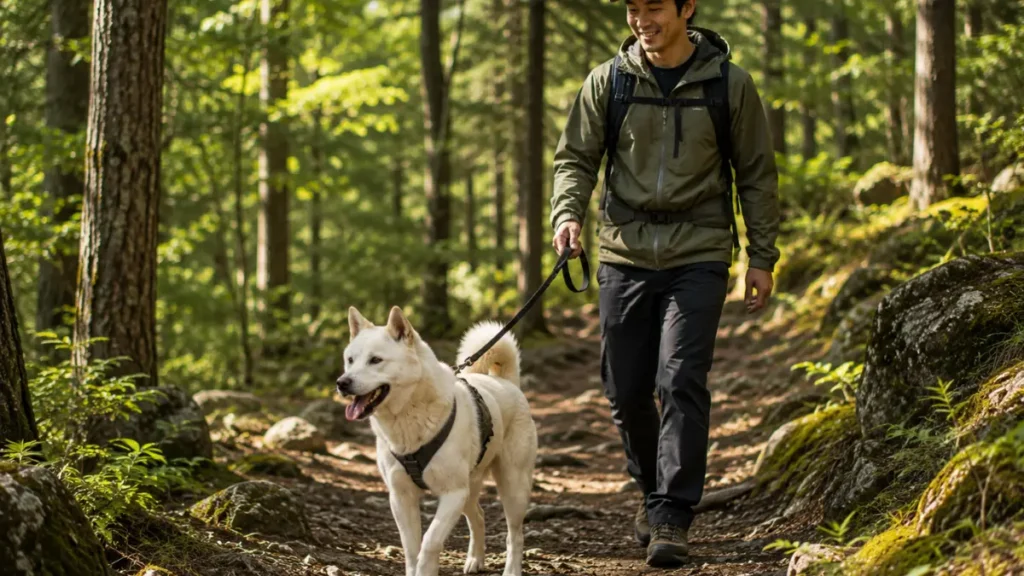
Choosing a dog should never be based on appearance alone.
The Kishu Ken is an exceptional breed—but only when its natural instincts match the owner’s lifestyle.
The Kishu Ken May Be an Excellent Choice If You:
- Enjoy hiking, trail walking, or other outdoor activities.
- Appreciate intelligent, independent dogs.
- Have time for daily exercise and structured training.
- Understand that trust develops gradually.
- Want a loyal companion rather than a dog that seeks constant attention.
- Are interested in primitive or traditional working breeds.
Owners who enjoy building a partnership with their dog often find the Kishu Ken incredibly rewarding.
The Kishu Ken May Not Be the Best Choice If You:
- Want a dog that instantly befriends everyone.
- Prefer a highly obedient breed that constantly seeks direction.
- Have very little time for exercise.
- Frequently leave your dog alone for long periods.
- Own small pets that cannot be safely managed.
- Expect reliability off leash in every environment.
The best dog isn’t the rarest or the most beautiful—it’s the one whose natural temperament fits your daily life.
Pros and Cons
| Pros | Cons |
|---|---|
| Deeply loyal and devoted to family | Strong prey drive requires management |
| Generally healthy breed | Independent personality can challenge inexperienced owners |
| Quiet indoors when properly exercised | Needs significant daily physical and mental stimulation |
| Moderate grooming requirements | Reliable off-leash recall takes time to develop |
| Athletic, agile, and adaptable | Reserved with strangers without proper socialization |
| Rich cultural history and working heritage | Responsible breeders can be difficult to find |
Common Myths About the Kishu Ken
Myth 1: “The Kishu Ken Is Naturally Aggressive.”
Reality: A well-bred Kishu Ken is typically calm, stable, and reserved, not aggressive. Confidence and caution around strangers are normal breed traits and shouldn’t be mistaken for poor temperament.
Myth 2: “Independent Means Untrainable.”
Reality: Independence and intelligence often go together in primitive breeds.
The Kishu Ken usually learns commands quickly but may evaluate situations before responding. Training based on trust, consistency, and positive reinforcement produces far better results than force.
Myth 3: “White Is the Only Correct Kishu Ken Color.”
Reality: Although white is now the most common color worldwide, historical records show that red and sesame Kishu Ken also existed long before white became dominant.
Understanding this history helps owners appreciate the breed’s development rather than assuming modern appearance reflects its entire past.
Myth 4: “A Large Backyard Provides Enough Exercise.”
Reality: Space alone doesn’t satisfy a working breed.
A Kishu Ken benefits far more from structured walks, hiking, scent work, and meaningful interaction than simply spending hours in a fenced yard.
Mental engagement is just as important as physical movement.
Interesting Facts About the Kishu Ken
- The Kishu Ken is one of Japan’s six recognized native dog breeds.
- The breed was traditionally used to hunt wild boar and deer in mountainous forests.
- Many Kishu Ken work quietly instead of barking continuously while tracking game.
- Preservation programs focused on maintaining working ability rather than appearance, helping the breed retain many of its original characteristics.
- Although still uncommon outside Japan, the breed has gained international recognition among enthusiasts who appreciate primitive working dogs.
Final Verdict
The Kishu Ken isn’t a breed that tries to impress everyone—and that’s precisely what makes it unique.
Centuries of working alongside hunters in Japan’s rugged mountains created a dog that values calm judgment over impulsive reactions, quiet loyalty over constant attention, and independent thinking over automatic obedience. Those qualities continue to define the breed today.
For experienced owners who appreciate primitive dogs, the Kishu Ken offers a rare combination of intelligence, athletic ability, and unwavering devotion. It thrives in homes where daily exercise, mental stimulation, and respectful training are part of everyday life.
For people seeking an easygoing, highly social companion that eagerly follows every command, another breed may be a better match.
Choosing a Kishu Ken means embracing a breed with deep historical roots, strong instincts, and a personality shaped by purpose rather than popularity. Owners who understand those traits often discover that the breed’s greatest strength isn’t its appearance or rarity—it’s the quiet, dependable partnership it builds with the people it trusts.
Frequently Asked Questions
Are Kishu Ken Good Family Dogs?
Yes. With proper socialization, they are loyal and dependable family companions. They generally do best in households that respect their independent personality and provide consistent leadership.
Do Kishu Ken Bark a Lot?
Compared with many breeds, the Kishu Ken is relatively quiet. Most individuals bark only when they believe there is a reason to do so.
Can a Kishu Ken Live With Cats?
Some can, particularly if raised with cats from puppyhood.
However, the breed’s strong prey drive means introductions should always be managed carefully, and individual temperament must be considered.
How Much Exercise Does a Kishu Ken Need?
Most healthy adults require 60–90 minutes of daily physical activity, combined with regular mental enrichment such as scent work, training, or problem-solving games.
Is the Kishu Ken Easy to Groom?
Weekly brushing is sufficient for much of the year, although seasonal shedding requires more frequent grooming.
Is the Kishu Ken Good for First-Time Owners?
Usually not.
While the breed is intelligent and loyal, its independence, prey drive, and need for experienced handling make it a better fit for owners familiar with working or primitive breeds.